


 Eng

 中文简体

 Home / News / Industry News / Heavy Duty Brake Shoe Assembly: Fit, Installation, and Maintenance Guide
Heavy Duty Brake Shoe Assembly: Fit, Installation, and Maintenance Guide
 2026.10.26
 Industry News
Brake work on a heavy truck or trailer leaves little room for guesswork. A heavy duty brake shoe assembly is not just a curved piece of steel with friction material attached; it is a matched set of geometry, lining, hardware, and heat management that has to work together every time the pedal is pressed. We have focused on stamped and welded brake shoes since 2010 at Zhejiang Langrun Auto Parts, and that experience has taught us one simple lesson: the assembly is only as good as its fit and its friction pair.
Content
- 1 What a Heavy Duty Brake Shoe Assembly Includes
- 2 Fit Starts With the Axle, Not the Catalogue Number
- 3 How the Assembly Works Under Real Load
- 4 Installation and Break-In Without Guesswork
- 5 Maintenance Signals and Repair Kit Decisions
- 6 American and European Patterns: What Changes, What Does Not
- 7 A Buyer’s Checklist for Heavy Duty Brake Shoe Assemblies
- 8 How We Approach Manufacturing and Support
What a Heavy Duty Brake Shoe Assembly Includes
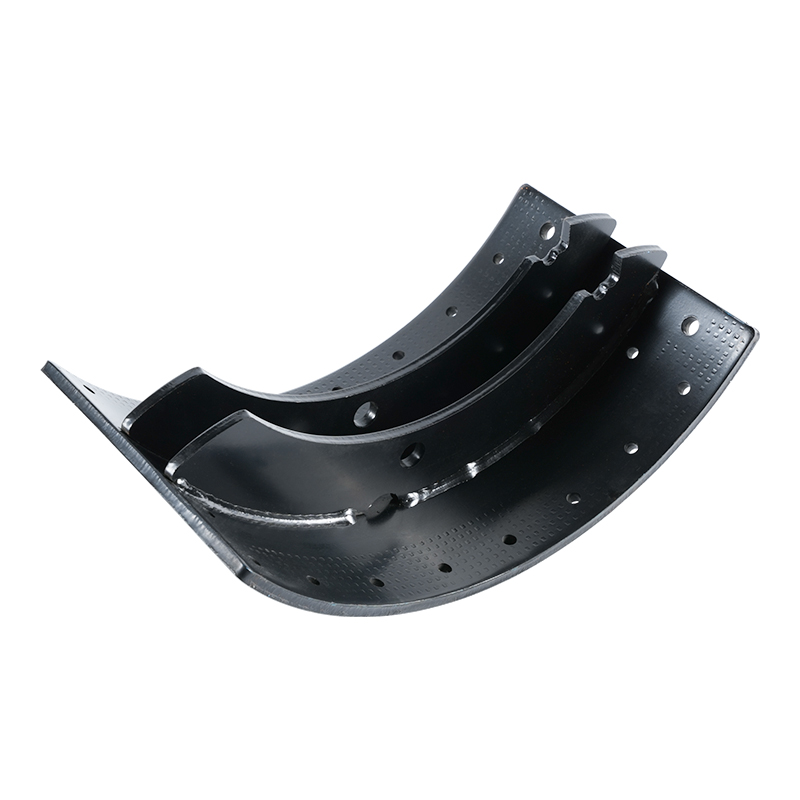
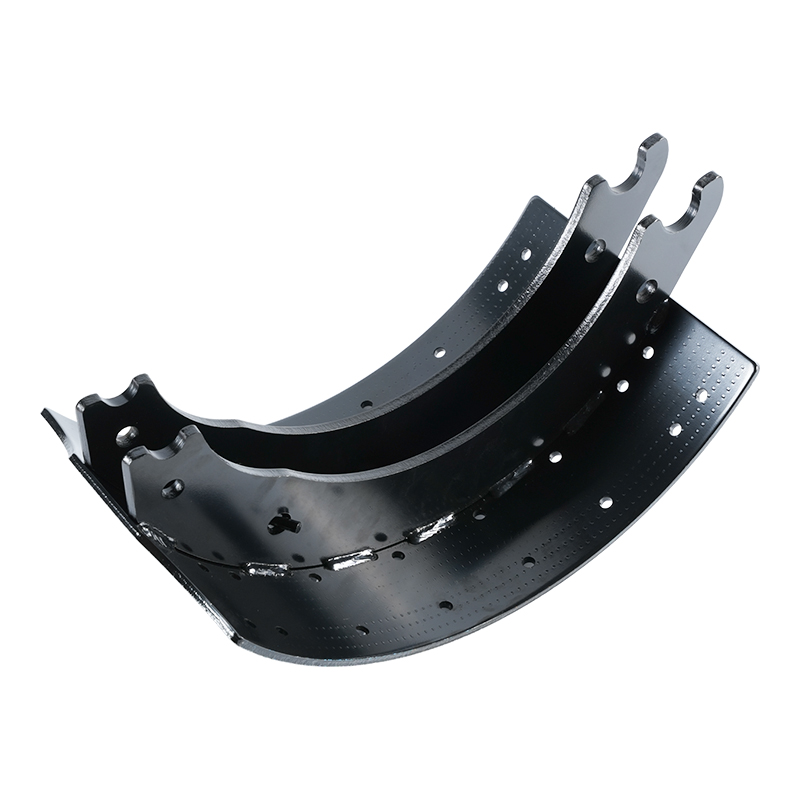
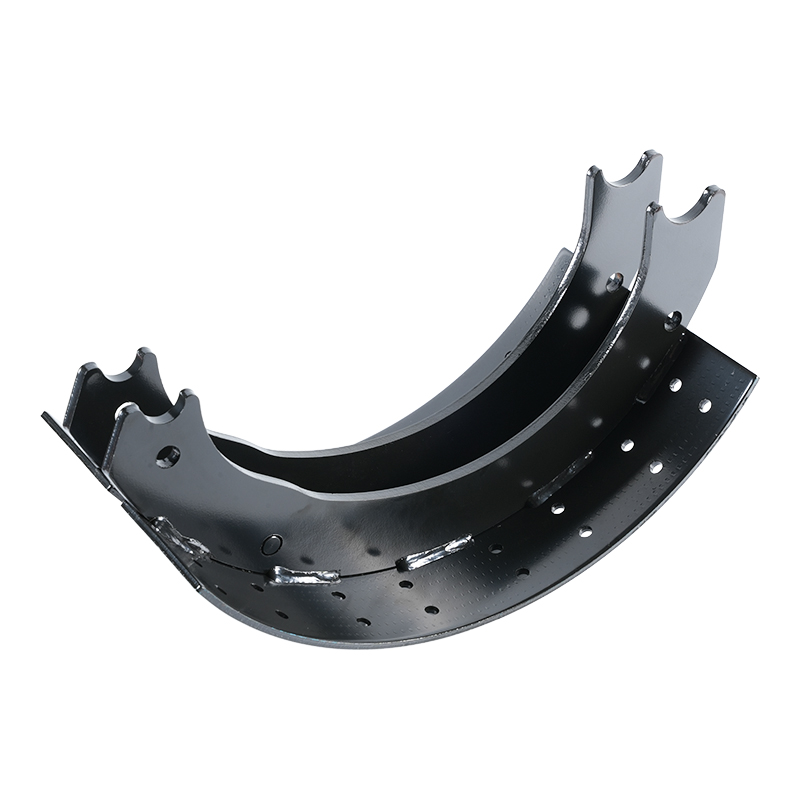
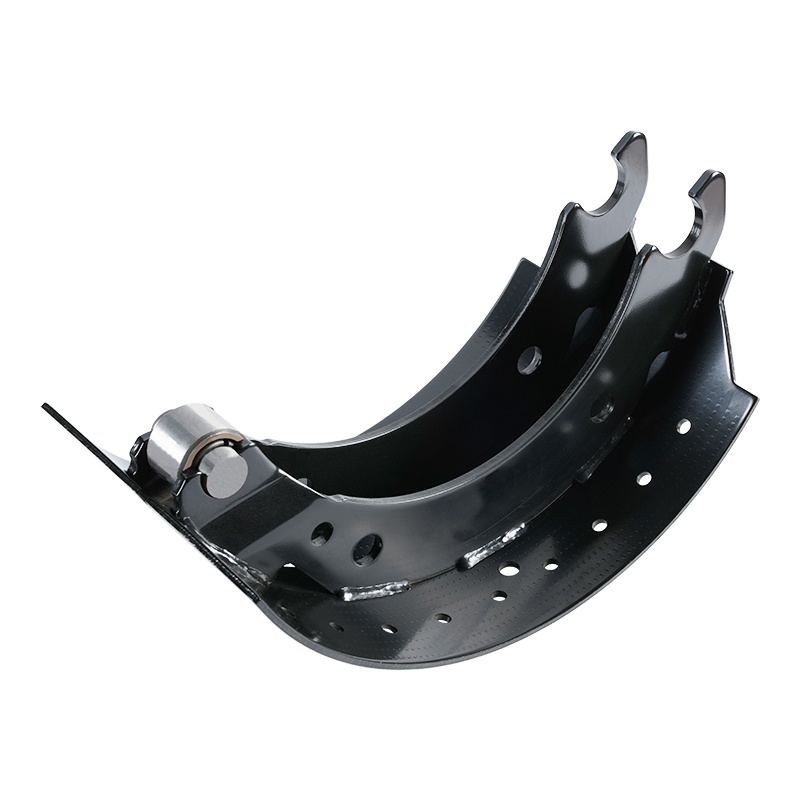
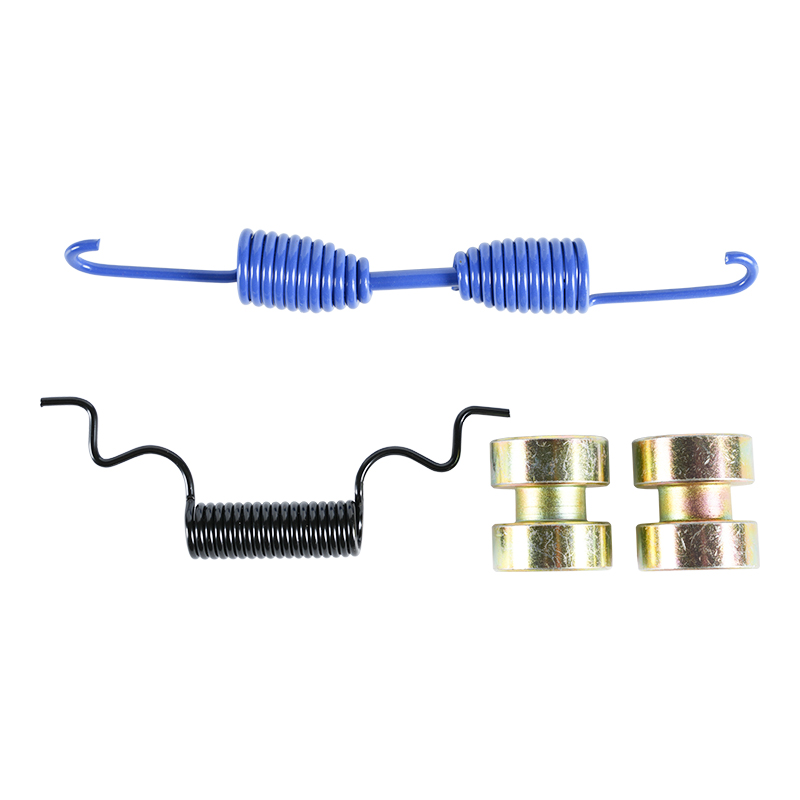
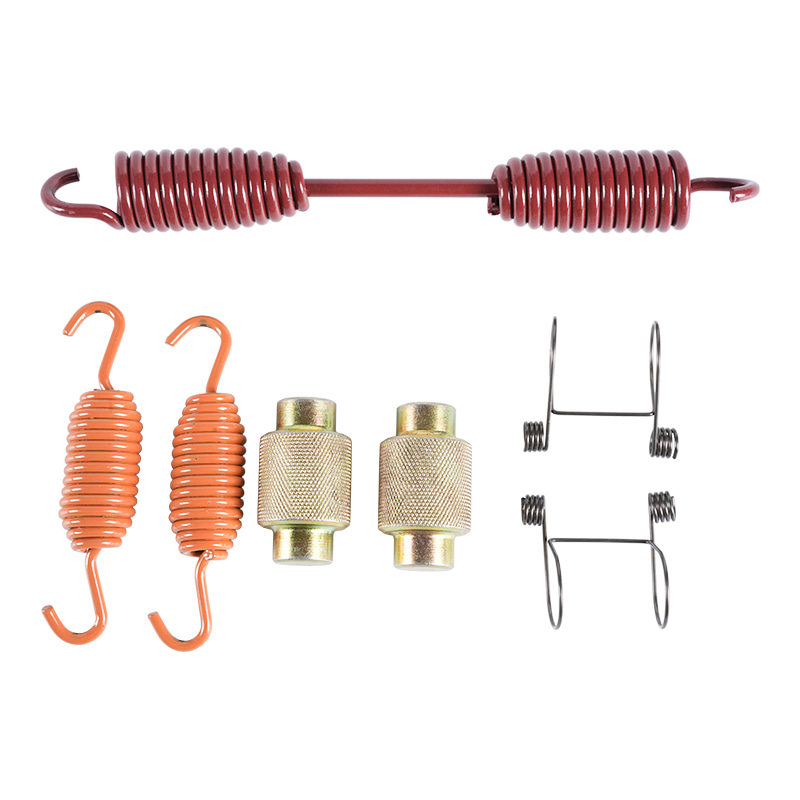
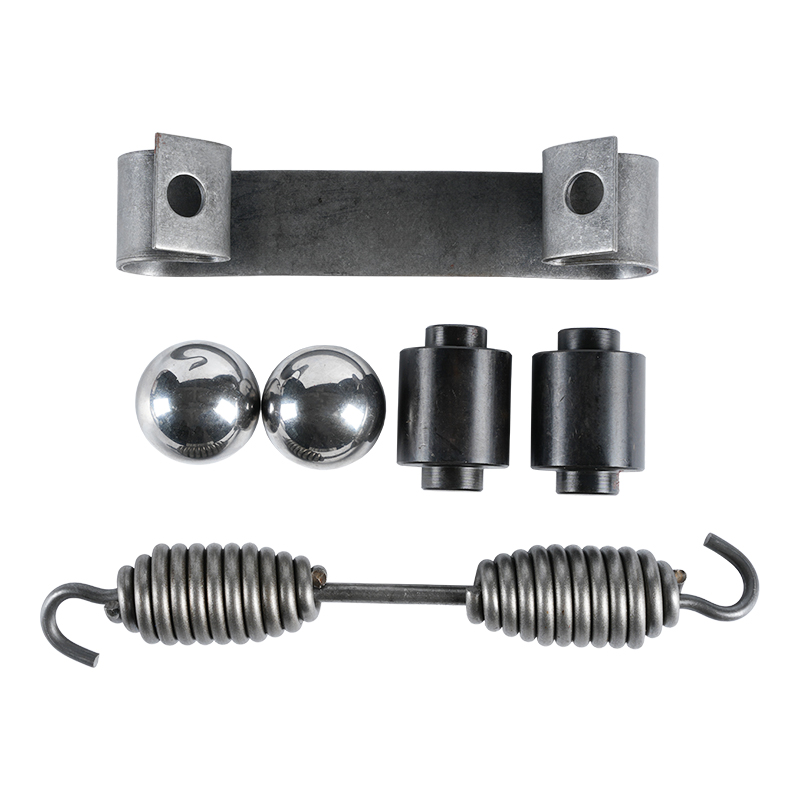
The core of the assembly is the shoe platform and web, which carry the friction lining and locate the shoe inside the drum. A complete assembly may also include rivets or bolts, rollers, springs, and other hardware depending on the design. A bare shoe, a lined shoe, and a full assembly are not interchangeable terms, and a repair kit may include only the parts needed to refresh an existing set.
| Component | What it does | What to check |
|---|---|---|
| Shoe platform and web | Carries the lining and locates the shoe in the drum | Straightness, weld quality, cam contact, rust protection |
| Friction lining | Converts motion into heat and controls stopping force | Grade, thickness, bond or rivet condition, contamination |
| Rivets or bolts | Hold the lining securely to the shoe | Tightness, countersink, cracks, loose material |
| Rollers, springs, and hardware | Return and align the shoes as the brake releases | Wear, tension, correct kit contents, free movement |
For a typical heavy-duty American application, our 4311 assembly is one example of a complete unit built around a known axle family rather than a generic drum size.
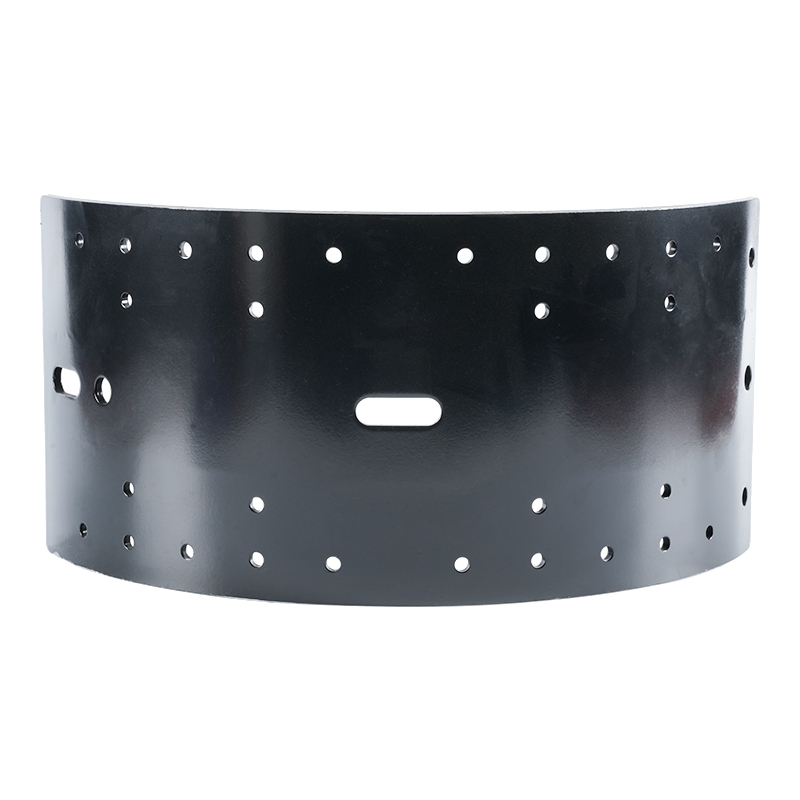 OEM 4311 Heavy Duty American Brake Shoe AssemblyComplete heavy-duty American brake shoe assembly built around a known axle family; check the catalogue number against the axle tag or build record before ordering.View Product →
Fit Starts With the Axle, Not the Catalogue Number
Two assemblies can share the same drum diameter and still differ in shoe width, lining thickness, cam angle, roller size, anchor pin layout, and offset. That is why a catalogue number should be confirmed against the axle tag or vehicle build record before anything is ordered. A part that looks close on the bench can wear quickly or run too hot on the road.
- Axle manufacturer, model, and tag number
- Drum diameter, maximum bore, and allowable out-of-round
- Shoe width, lining thickness, and rivet pattern
- Cam type, roller size, and anchor pin arrangement
- Duty cycle: line-haul, tipper, tanker, trailer, or mixed fleet
- Market standard and any customer-specific approval
For North American semi-trailer work, our 4702 assembly is built around a trailer-first view of fit, lining choice, and hardware.
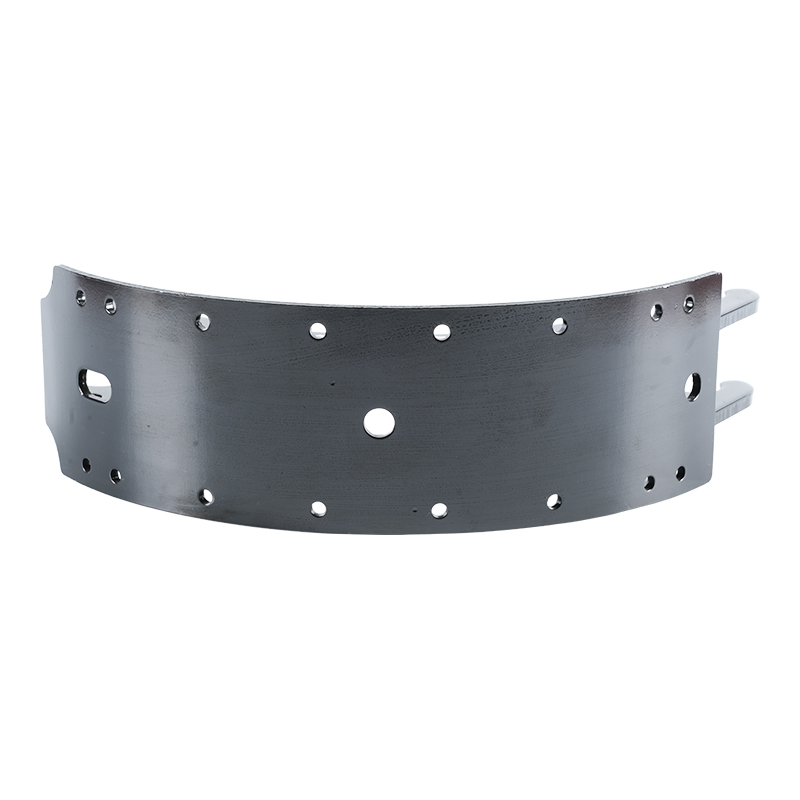 OEM 4702 North American Semi-Trailer Brake Shoe AssemblySemi-trailer brake shoe assembly for North American trailer work, with customizable asbestos-free lining; match it to axle, load, and route.View Product →
How the Assembly Works Under Real Load
In a typical air drum brake, pressure enters the chamber and moves a pushrod, which works through a slack adjuster to rotate the S-cam. The cam spreads the shoes against the drum, and the lining converts motion into heat. The assembly must then release cleanly and return to its rest position. Heat, dust, moisture, and road salt all affect that cycle. A lining that is too aggressive for the duty cycle can create noise and drum cracking, while a lining that is too mild may fade on a long descent. The right choice is the one that matches the axle, the load, and the driver’s route.
Installation and Break-In Without Guesswork
Installation is where good parts are often let down by small habits. Work from a clean drum and a verified axle specification, not from memory.
- Clean and inspect the drum, then measure diameter and out-of-round against the limit.
- Inspect or replace springs, rollers, cam bushings, anchor pins, and the slack adjuster as needed.
- Apply the specified high-temperature brake grease to the correct contact points, and keep grease away from friction surfaces.
- Seat the assembly, fit the rollers and keepers correctly, and check the shoe-to-drum contact pattern.
- Adjust the brake to the axle maker’s specification and verify pushrod stroke.
- Road test and burnish with moderate stops, avoiding prolonged drag or overheating.
A clean contact pattern and free return are more important than a heavy initial adjustment. For a deeper sequence, our guide to mastering brake shoe assembly installation walks through the practical steps.
Maintenance Signals and Repair Kit Decisions
Heavy-duty brakes often give warning before they fail. A longer stopping distance, a pull to one side, uneven lining wear, cracks, oil contamination, or a slack adjuster that will not hold stroke are all reasons to stop and inspect. Blue heat marks, deep drum scoring, broken springs, and loose rollers also point to a system problem rather than a lining problem alone.
- Lining worn close to the rivet heads or backing plate
- Cracks, glazing, or oil-soaked friction material
- Broken or weak return springs and worn rollers
- Drum cracks, deep scores, or excessive out-of-round
- Noise that remains after correct adjustment
When the shoes and drums are still within specification, a repair kit can be the economical choice. When the platform is distorted, the lining is contaminated, or the drum is worn beyond its limit, a complete assembly is usually the safer path.
American and European Patterns: What Changes, What Does Not
American and European brake patterns solve the same problem with different geometry, cam arrangements, and hardware conventions. A country label alone is not a fitment guide; the axle and drum specification still decide. Our range covers both patterns and different levels of completeness, which helps distributors and workshops avoid mixing a North American shoe with European hardware. For European semi-trailer and truck applications, our European 300-200 assembly is one example of a complete unit for a common platform.
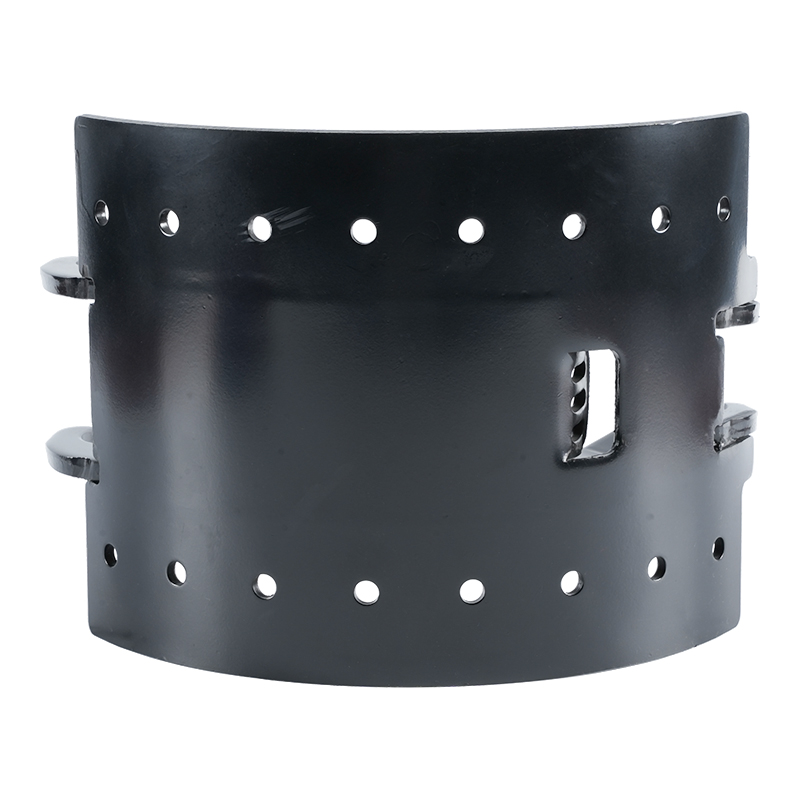 OEM BPW 300×200 European Brake Shoe AssemblyComplete BPW 300×200 European brake shoe assembly for heavy-duty truck and trailer platforms; compare wear life and total cost, not just set price.View Product →
A Buyer’s Checklist for Heavy Duty Brake Shoe Assemblies
Price per set is easy to compare; cost per 100,000 kilometres is not. A useful buyer’s checklist should go beyond the unit price.
- Ask for a drawing and the critical dimensions, not only a model name.
- Confirm the lining grade, thickness, and friction test data.
- Check whether hardware, rollers, and springs are included.
- Request batch traceability and inspection records.
- Confirm rust protection and packaging for sea freight.
- Validate test evidence against the standards used in your market.
- Fit a sample set before committing to a large order.
How We Approach Manufacturing and Support
At our base in Anji, Zhejiang, we concentrate on stamped and welded brake shoes, asbestos-free linings, brake shoe assemblies, and repair kits for heavy trucks, trailers, and engineering vehicles. Our customers are mainly heavy vehicle manufacturers and axle makers in Europe and the Americas, so the work is practical: keep geometry consistent, control weld quality, match the lining to the application, and make the part number easy to confirm. Our published quality approach includes US-style bench testing and domestic automotive standards, but buyers should still ask for current reports for the exact part they are ordering. That is not a lack of confidence; it is how a serious brake component should be bought.
A heavy duty brake shoe assembly is a small part of the vehicle cost and a large part of the safety case. Fit it to the axle, match it to the duty cycle, install it with clean hardware, and inspect it before wear becomes a failure. That approach keeps fleets stopping safely and keeps maintenance budgets predictable.

 Home
 +86-158-6900-2386 / +86-0571-61075636
 zjlrqp@163.com
 No. 518, Nanhu Road, Tianzihu Town, Anji County, Zhejiang Province, China

Copyright © Zhejiang Langrun Auto Parts Co., Ltd. All rights reserved. Heavy-Duty Brake Shoe Manufacturer in China

