


 Eng
Eng 
 中文简体
中文简体
 Home / News / Industry News / Heavy Duty Brake Shoe Assembly: Complete Selection Guide for Fleet Managers
 Heavy Duty Brake Shoe Assembly: Complete Selection Guide for Fleet Managers
 2026.09.02
 Industry News
In a fleet maintenance bay, the heavy duty brake shoe assembly is usually the last item on the schedule. Pull the wheel, remove the drum, then try to get a flashlight beam between the lining and the drum. That is how most technicians judge wear on a commercial vehicle. But when a web plate shows a hairline crack, a return spring is stretched, or the lining is worn past the rivet line, the whole system stops being predictable. A heavy duty brake shoe assembly is more than a steel arc with friction material riveted on. It converts air or hydraulic pressure into controlled stopping torque, transfers heat, keeps the lining aligned with the drum, and absorbs the shock of every axle load reversal. When one of those functions fails, the brake job becomes a roadside breakdown.
Content
- 1 What Defines a Heavy Duty Brake Shoe Assembly?
- 2 How Manufacturing Quality Affects Brake Shoe Assembly Performance
- 3 American and European Heavy Duty Brake Shoe Assemblies: Key Differences
- 4 How to Select the Correct Heavy Duty Brake Shoe Assembly
- 5 When to Replace the Full Assembly or Use a Repair Kit
What Defines a Heavy Duty Brake Shoe Assembly?
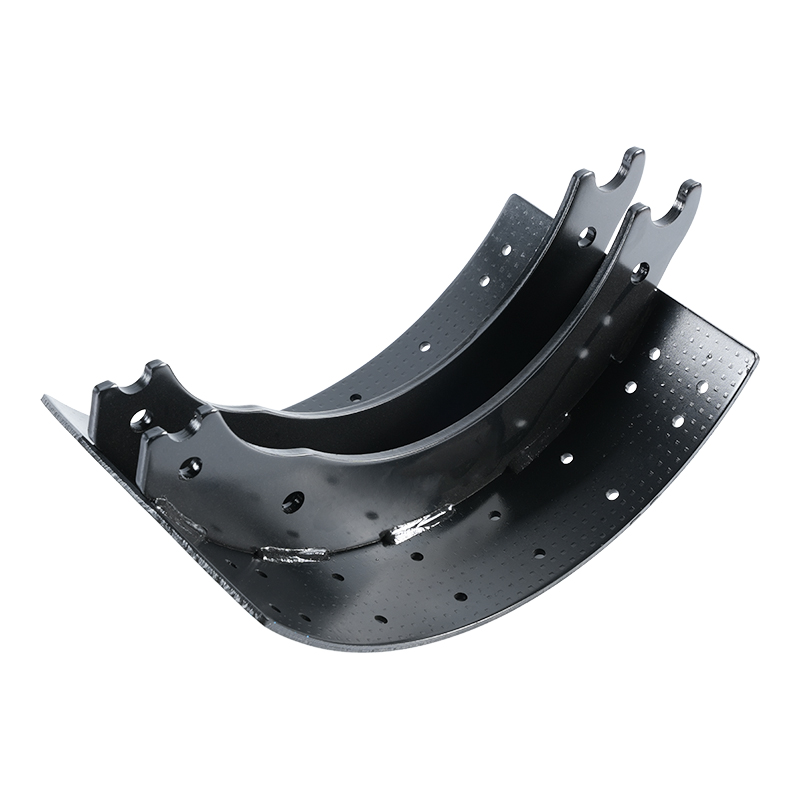
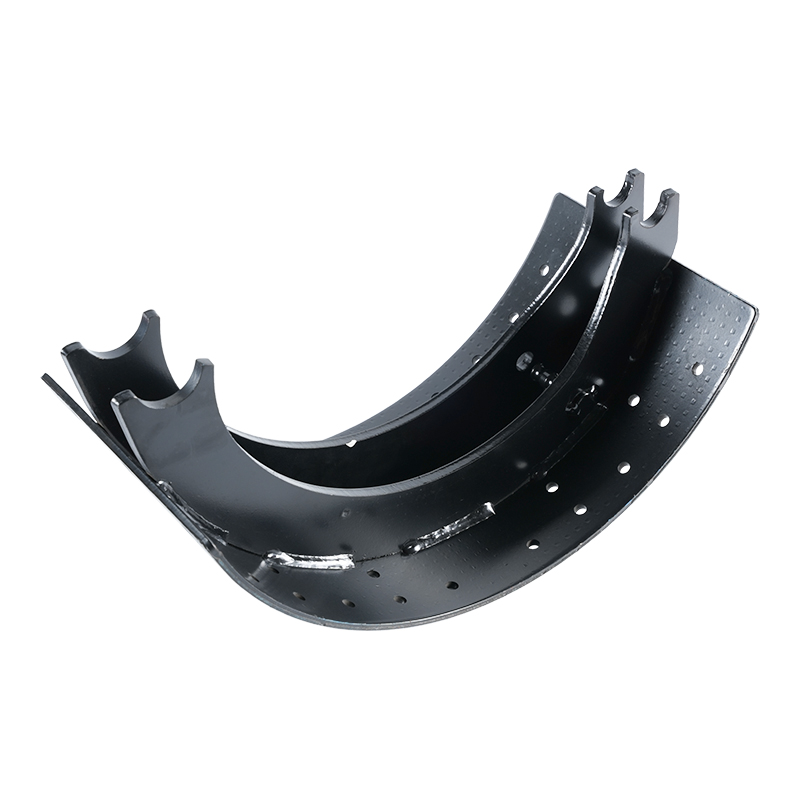
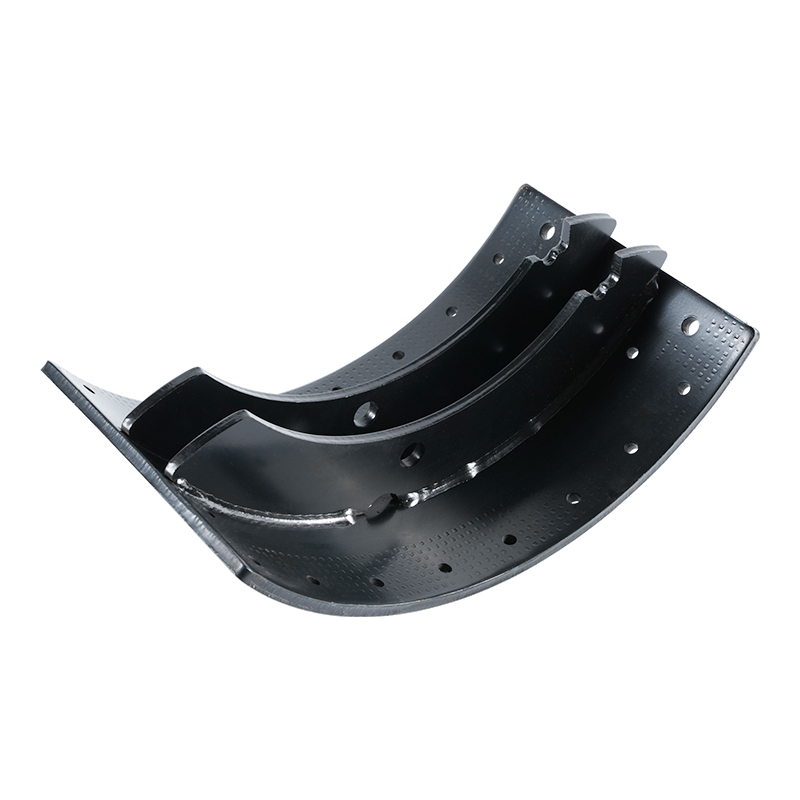
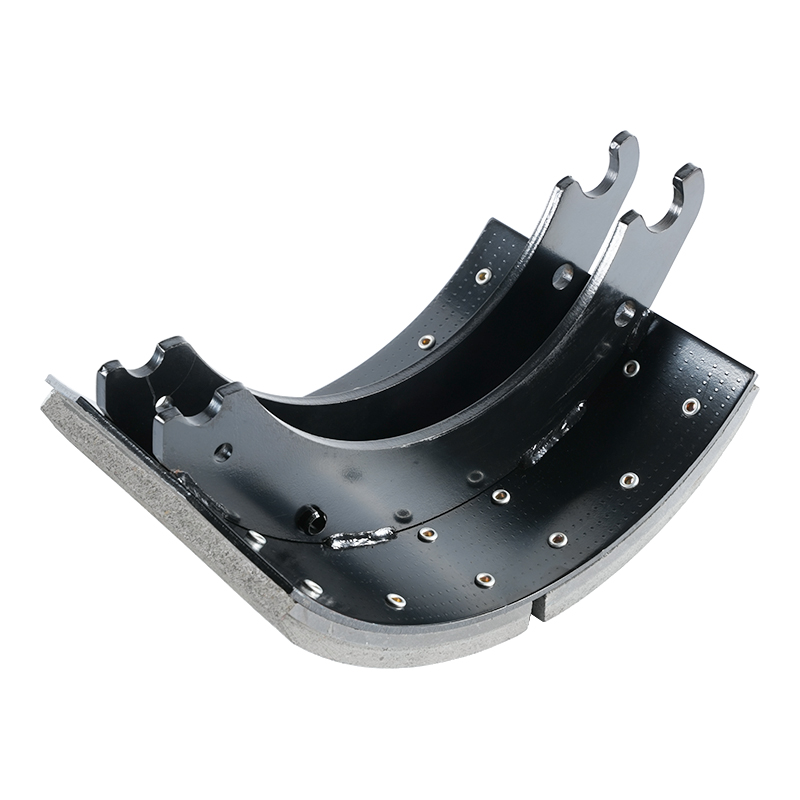
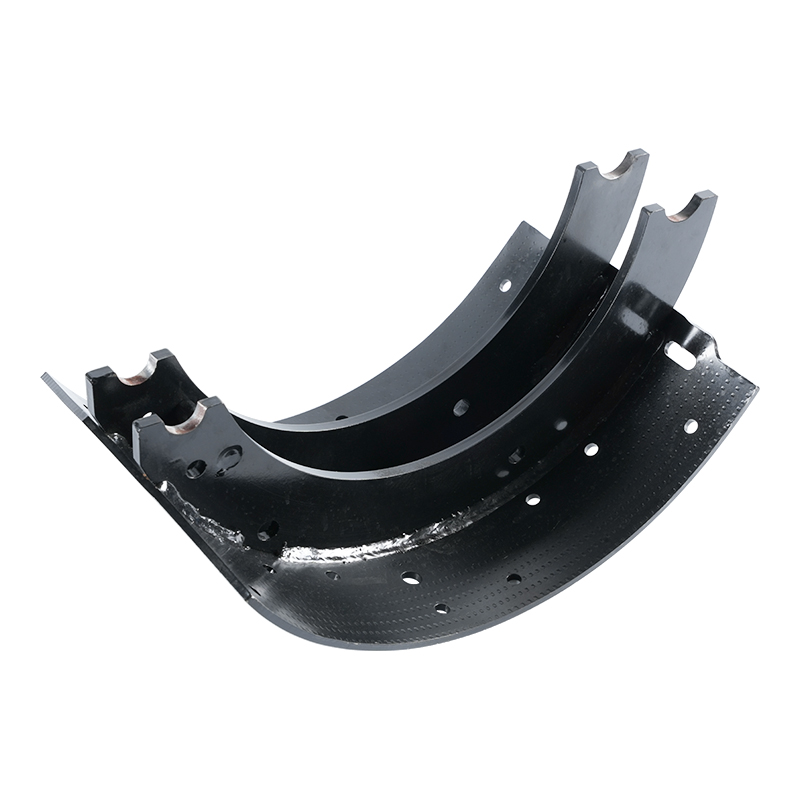
A brake shoe assembly is the complete unit installed into a drum brake. On heavy trucks, semi-trailers, and construction vehicles, that unit typically includes the shoe or backing plate, the friction lining, rivets or bonding adhesive, an adjuster strut, and a set of return springs. The assembly is the only moving part in the drum brake that carries the friction material directly against the rotating drum.
The conclusion is straightforward: the biggest sourcing risk is not picking a bad lining, but choosing an assembly where the shoe geometry and lining grade are mismatched. When shoe and lining work together, the brake delivers even wear, stable pedal feel, and fewer chassis complaints. When they are out of sync, you see uneven shoe contact, hot spotting on the drum surface, and lining failure far earlier than expected.
Core components and their roles
- Backing plate (shoe): stamped from high-tensile steel, usually 5–8 mm thick on heavy duty applications. It must keep its arc under repeated braking loads.
- Friction lining: asbestos-free formulas like semi-metallic, ceramic, or organic compounds. The friction grade matters more than the trade name.
- Rivets or bonding: riveted linings are easier to replace in the field; bonded linings handle higher heat and are common on American platforms.
- Adjuster mechanism: automatic or manual, keeps shoe-to-drum clearance correct as lining wears.
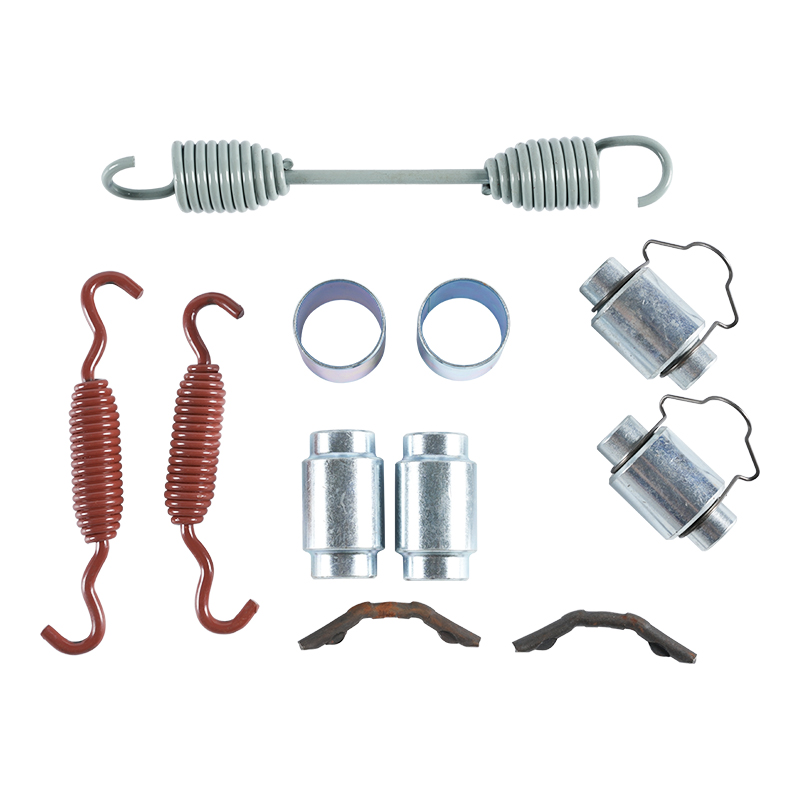
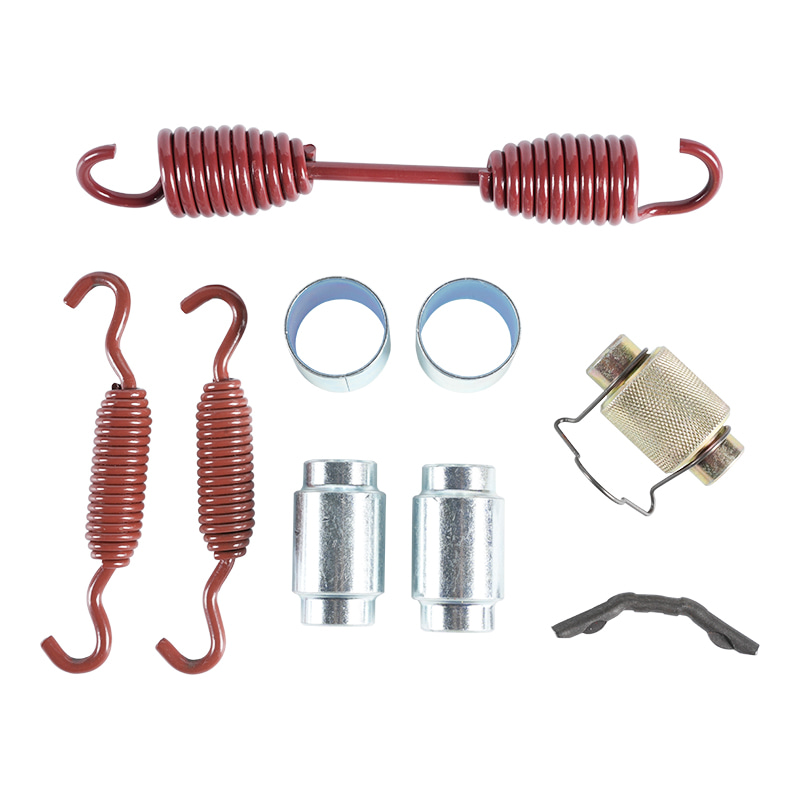
- Return springs: restore the shoe to rest position. Stretched springs change pedal feel and increase drum drag.
In a heavy duty drum brake, the wheel cylinder pushes two shoes outward. The shoe that leads in the direction of drum rotation does most of the work. On a steep downhill descent, that leading shoe can handle roughly 60% of the total braking force. That concentrated load is exactly why a marginal shoe geometry will show uneven wear on the leading edge and sometimes on the trailing edge as well.
How Manufacturing Quality Affects Brake Shoe Assembly Performance
The service life of a heavy duty brake shoe assembly is determined by dimensional tolerance and surface treatment far more than by the lining name. A shoe that flexes under braking creates a false sense of brake fade, even when the lining is still thick. That is why the stamping and welding process deserves as much attention as the friction material.
| Inspection Item | OEM-Level Standard | Common Aftermarket Defect |
|---|---|---|
| Steel web plate thickness | Consistent gauge, no thinning after stamping | Inconsistent thickness, visible stamping marks |
| Weld quality | No undercut, full penetration, clean bead | Incomplete weld, weld cracks |
| Lining rivet spacing | Uniform 30–40 mm spacing, no hole distortion | Misaligned holes, lining shifts under braking |
| Surface corrosion protection | Coating passes salt spray test, no rust | Corrosion appears after short operating time |
| Drum fit | Shoe arc matches drum arc, no high spots | Uneven contact, premature edge wear |
Suppliers with a dedicated stamping and welding line, rather than a general hardware shop, are more likely to hold these tolerances. A deep dive into brake shoe assembly manufacturing and quality control gives fleet managers a practical checklist for evaluating new vendors before the first order. Pay attention to how the shoe is formed, how the web plate is welded, and whether surface coating is applied after welding or only before. The order of operations affects corrosion resistance and weld strength.
The most common field failure for a heavy duty brake shoe assembly is not a broken shoe but a stretched return spring that goes unnoticed. A stretched spring cannot pull the shoe back fully, so the lining stays slightly in contact with the drum. The driver feels drag on one axle and often compensates with more brake input, which increases drum temperature and accelerates lining wear on the other axle.
American and European Heavy Duty Brake Shoe Assemblies: Key Differences
Fleets that operate mixed equipment need to understand the difference between American and European heavy duty brake shoe assemblies. American platforms are built around axle systems like Meritor, Fuhua, and Eaton. European axles come from BPW, SAF, and Volvo. These are not just different labels; they involve different shoe dimensions, adjuster positions, and lining formulations.
An American assembly typically has a larger web plate, uses riveted linings, and is designed to meet FMVSS 121 friction requirements for commercial vehicles. The adjuster is often a separate mechanism rather than a fully integrated unit. This design favors relatively simple service procedures and field replacement of individual components.
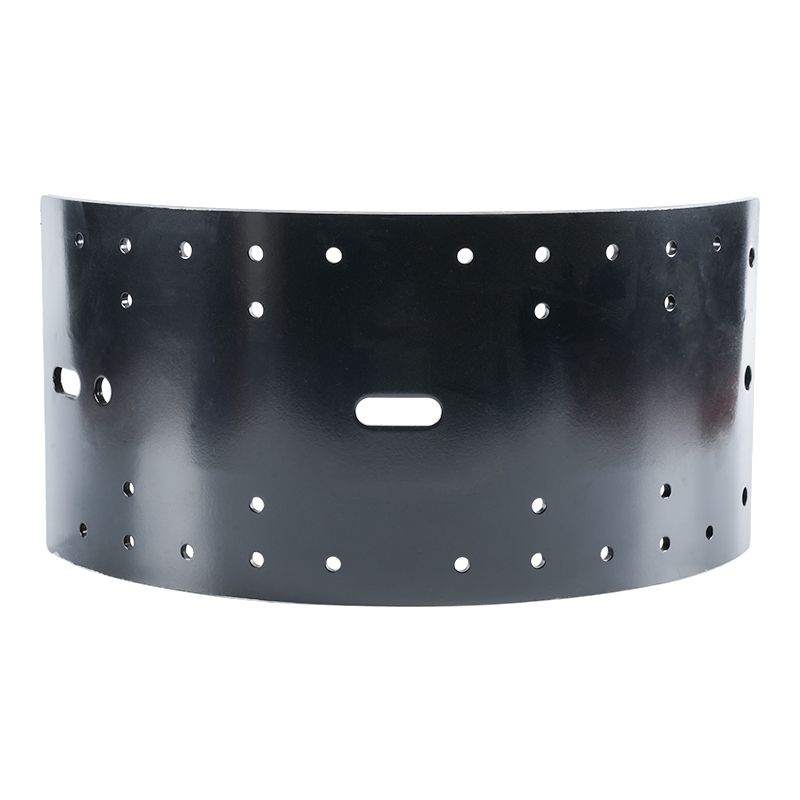 4311 Heavy Duty American Brake Shoe Assembly for US MarketDesigned for demanding US market applications, this assembly features riveted linings and a separate adjuster, suits FMVSS 121 requirements, and offers customizable, asbestos-free pads for varied road conditions.View Product →
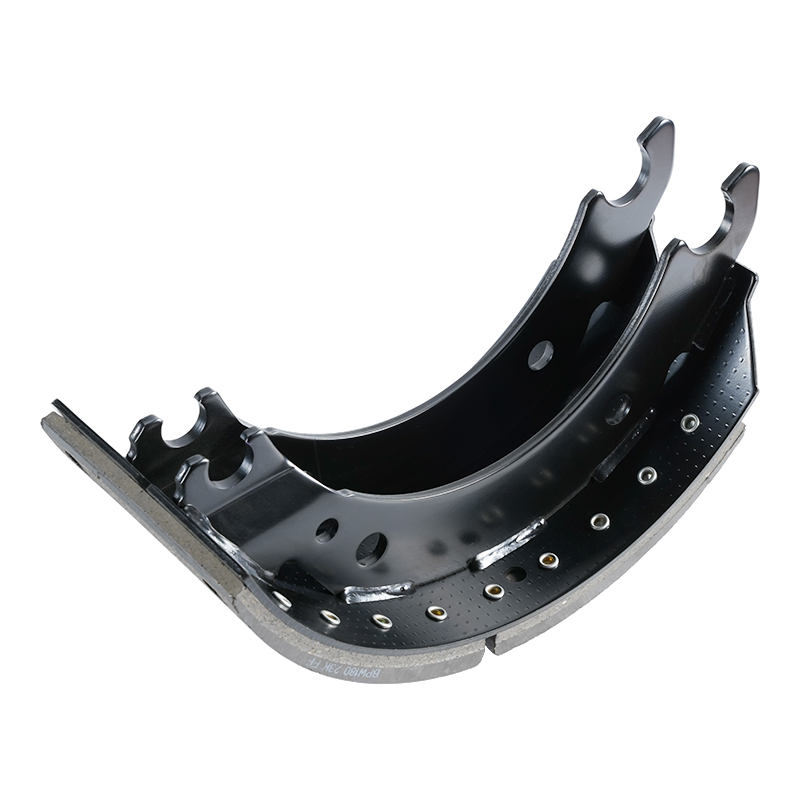
European assemblies are generally more compact, integrate the automatic adjuster directly, and use bonded or rivet-bonded linings. Their lining compounds are developed for ECE-R90 compliance and lean toward consistent friction across a wide temperature range. The result is a more tolerant brake system for trailers that carry variable loads in different climates.
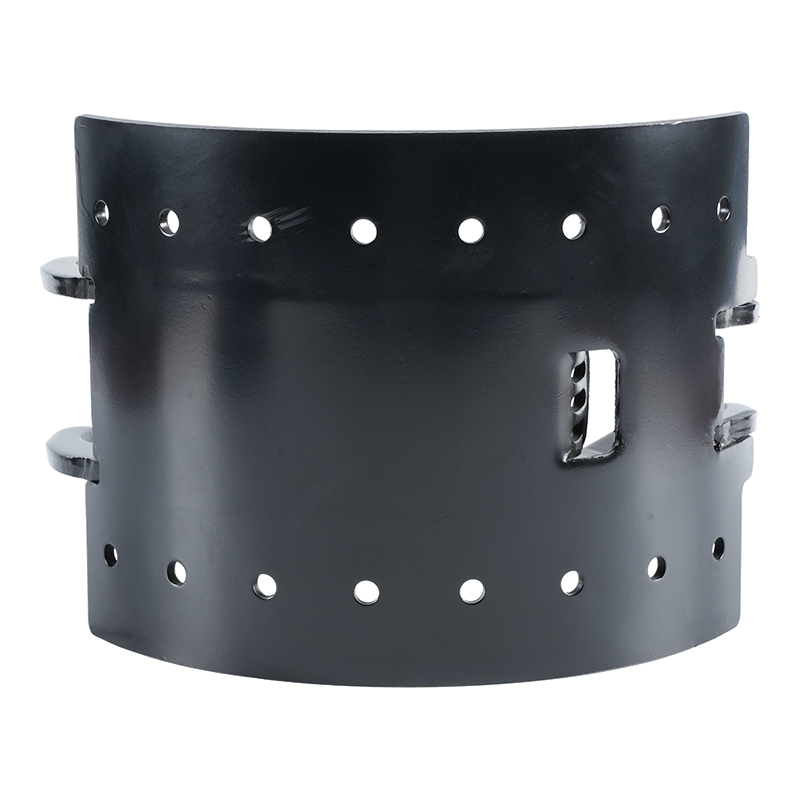 BPW 300x200 European Brake Shoe Assembly for TrailersCompact European-style assembly with integral automatic adjuster and ECE-R90 compliant linings, providing consistent friction across temperatures for variable-load trailer operations.View Product →
When a maintenance team mixes these two systems on the same trailer set without confirming the axle platform, the consequences are often wrong drum contact, no brake adjustment, or an uncomfortable pedal after a few weeks. Matching the assembly to the axle platform is the first rule of sourcing.
How to Select the Correct Heavy Duty Brake Shoe Assembly
The selection process should always begin with the axle platform, not the part number. The axle brand determines the shoe radius, the drum diameter, the adjuster mounting points, and the correct lining grade. Starting from a part number without confirming the axle can cause fitment issues that only appear once the brake is reassembled.
Practical selection criteria
- Axle platform: choose between Meritor, BPW, Fuhua, Eaton, SAF, or Volvo geometry first.
- Brake drum diameter: common heavy truck drums are 420–430 mm; European trailer drums often measure 400–420 mm.
- Lining friction grade: verify the letters assigned by the drum brake standard, such as FF, EF, or GG in the ECE system.
- Application severity: regional haul, long haul, and off-road construction use different lining density and shoe reinforcement.
- Hardware and adjuster: confirm whether the assembly arrives with adjuster strut and springs, or whether they need to be ordered separately.
For fleet buyers who source a complete American assembly for semi-trailer duty, the comprehensive guide to heavy duty brake shoe assemblies explains how axle brand and part selection connect. The same guide covers the difference between brake shoes for long-haul tractors and those for spread-axle trailers.
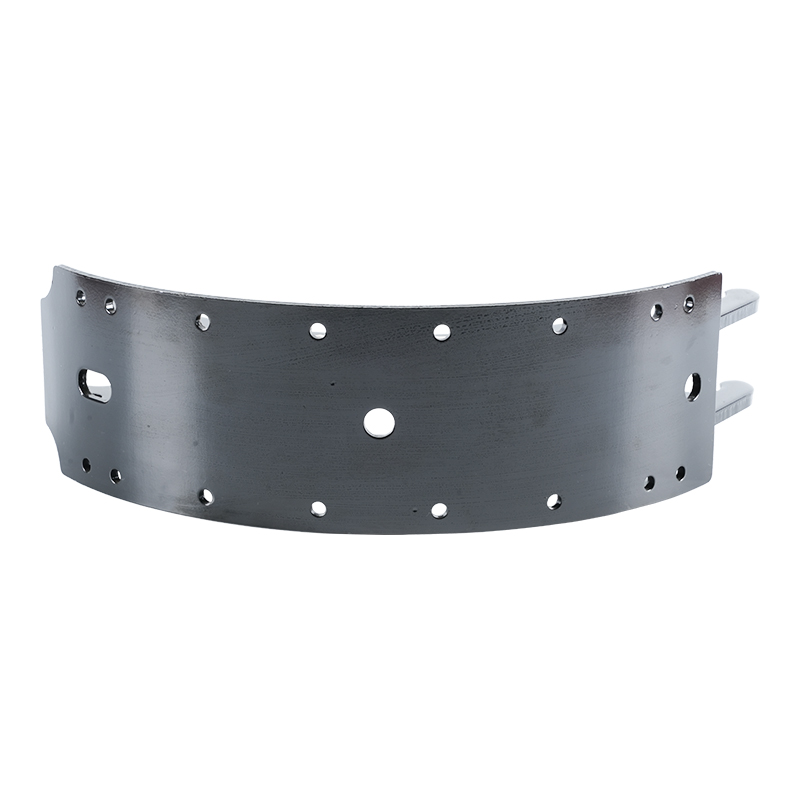 4702 North American Assembly Semi-Trailer Parts with Customizable PadsEngineered for North American semi-trailers, this assembly supports customized brake pads for different environments, emphasizing durability, low wear, and high-temperature stability without asbestos.View Product →
Another practical tip from fleet maintenance managers: before committing a large order, run a sample fitment on one axle. This confirms that the assembly seats correctly, the adjuster operates within its designed stroke, and the drum contact marks are even across the full lining width. It takes about half an hour and prevents a batch-level fitment issue.
When you receive a quote from a potential supplier, ask for the precise axle compatibility list, the lining friction grade, and the included hardware. A complete assembly should not require the maintenance bay to buy extra parts before installation.
When to Replace the Full Assembly or Use a Repair Kit
The decision between a repair kit and a full brake shoe assembly is largely a wear-pattern question. If the lining is worn out but the shoe web is still straight and within dimensional tolerance, re-lining with a repair kit can be a reasonable option. If the web plate is cracked, the shoe arc is deformed, or the adjuster threads are stripped, a full assembly must be installed.
| Found Condition | Recommended Action | Cost and Fleet Impact |
|---|---|---|
| Cracked shoe web plate | Full assembly replacement | High cost, but required for safety |
| Lining worn out, shoe straight | Repair kit or re-lining | Low cost, common decision for trailer fleets |
| Adjuster stuck or stripped | Full assembly recommended | Medium cost, avoid premature rework |
| Return springs stretched | Replace all springs with lining | Low cost, required for even brake torque |
For heavy truck operators, an annual inspection that catches a cracked shoe early saves a roadside breakdown. The same applies to semi-trailer fleets, where a worn assembly can lead to uneven trailer pull during hard braking. A preventive replacement schedule based on accumulated mileage and torque demand is more reliable than waiting for a brake warning light that many drum systems do not have.
Heavy duty brake shoe assemblies are also a good candidate for batch replacement across a fleet. Replacing shoes and return springs on all axles at the same interval keeps brake torque balanced. That balance reduces tire wear and helps the driver maintain a straight lane, which is especially important for long-distance runs.
A repair kit is still the right choice for fleets that have a strong in-house brake shop and can measure shoe arc, drill out old rivets, and set new linings on a dedicated press. For fleets without that capability, buying a fully assembled brake shoe eliminates the risk of a shop-made riveting error that shows up as uneven braking after a few weeks.

 Home
Home +86-158-6900-2386 / +86-0571-61075636
 zjlrqp@163.com
 No. 518, Nanhu Road, Tianzihu Town, Anji County, Zhejiang Province, China
Copyright © Zhejiang Langrun Auto Parts Co., Ltd. All rights reserved. Heavy-Duty Brake Shoe Manufacturer in China

