


 Eng

 中文简体

 Home / News / Industry News / Industrial Brake Shoes: Applications, Selection Criteria, and Practical Guidance
Industrial Brake Shoes: Applications, Selection Criteria, and Practical Guidance
 2026.11.04
 Industry News
Industrial brake shoes are the working surface of a drum brake, and on a loaded truck or trailer they are the difference between a controlled stop and a long, expensive slide. The part itself is simple: a curved steel platform with friction material bonded or riveted to it. What is not simple is everything around it, from the grade of steel and the placement of the welds to the way the shoe sits on its anchor pin and releases when the pedal comes up. This guide walks through what industrial brake shoes actually are, how they wear, how to specify the right one and how to keep a set in service longer.
Content
What the Term "Industrial Brake Shoes" Covers
The word industrial is a buying category rather than a technical one. It describes drum brake shoes engineered for commercial and industrial duty instead of passenger cars: long-haul tractors, semi-trailers, tippers, tankers, refuse trucks, yard shunters and some off-highway equipment. Compared with a light vehicle shoe, an industrial shoe is larger, carries a much thicker lining, and is expected to keep its shape at drum temperatures that would ruin a smaller part. A single trailer axle can carry more braking burden than a whole passenger car.
In the parts catalogue the category splits into four practical forms:
- Bare shoes. Stamped and welded steel shoes supplied without friction material, for workshops that bond or rivet their own lining.
- Lined shoes. The most common service item, ready to fit once the drum has been measured.
- Assemblies. Shoe, lining and hardware matched together, which shortens fitting time and removes the risk of mismatched components.
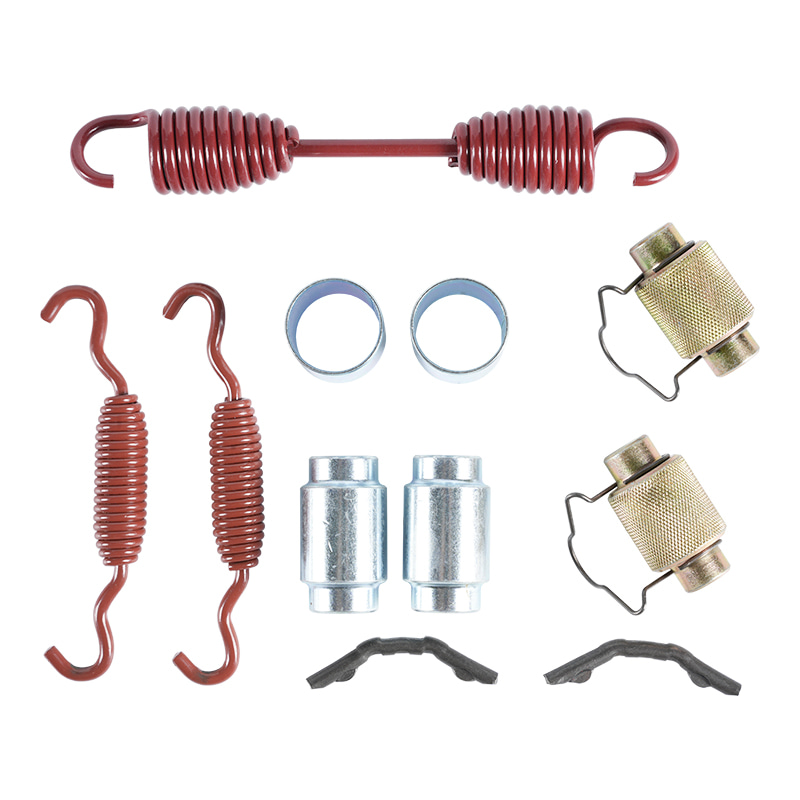
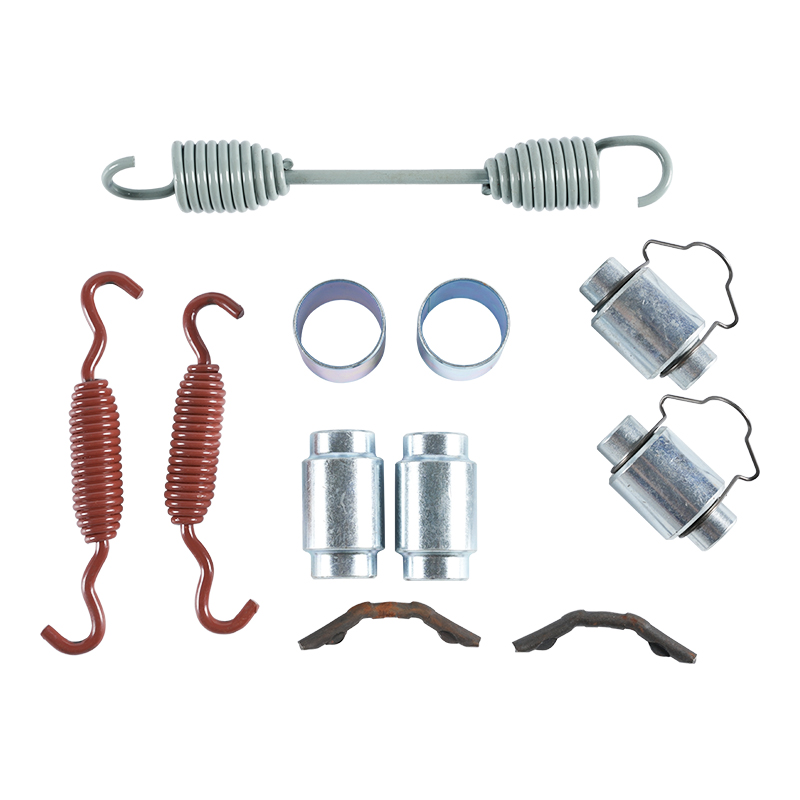
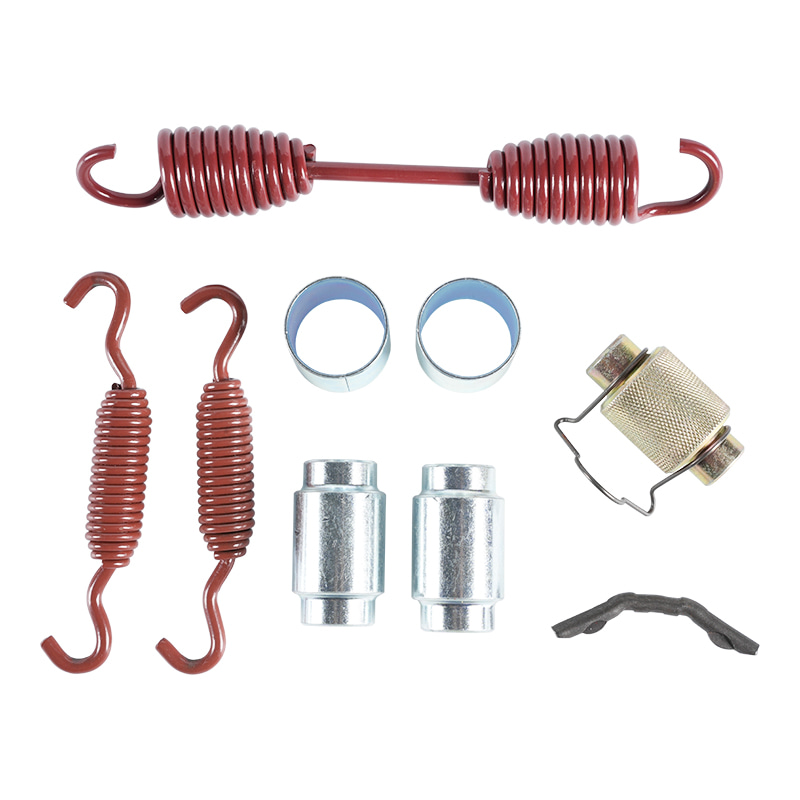
- Repair kits. Springs, rollers, anchor pins and retainers grouped by axle reference for a full rebuild rather than a lining swap.
How a Drum Brake Shoe Does Its Job
The steel platform
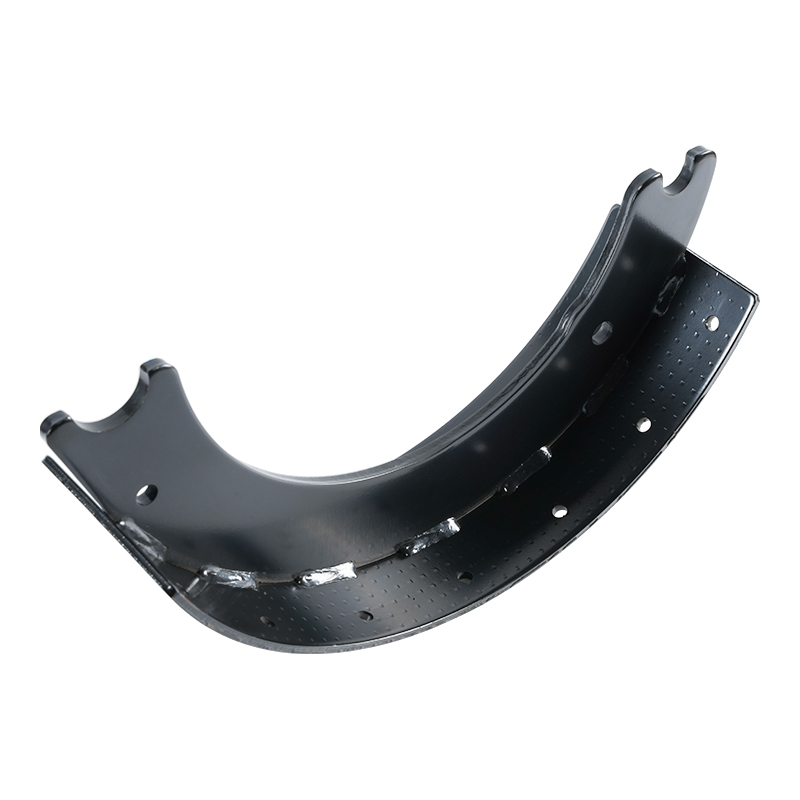
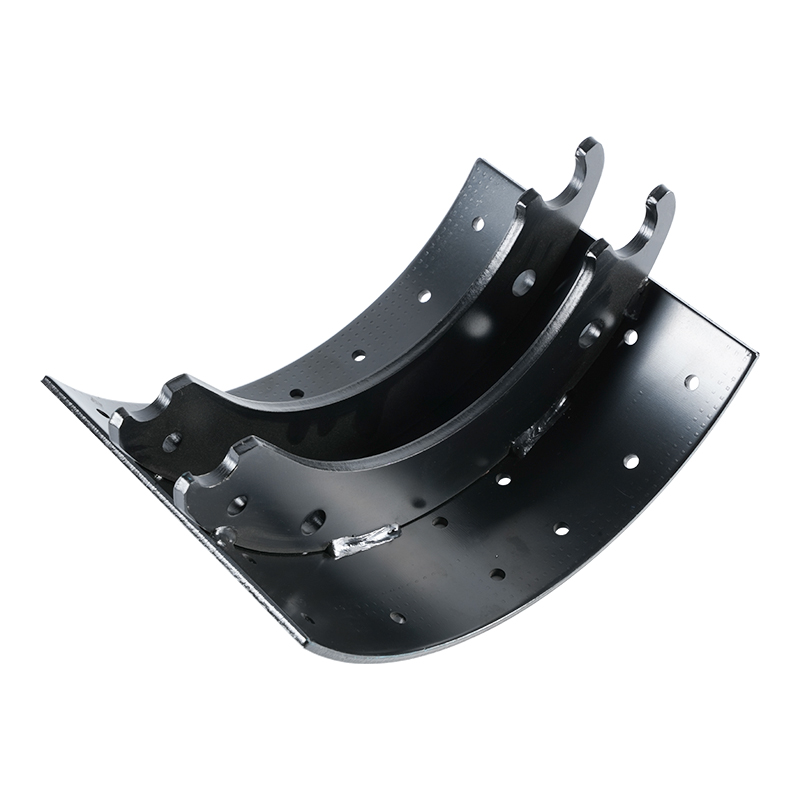
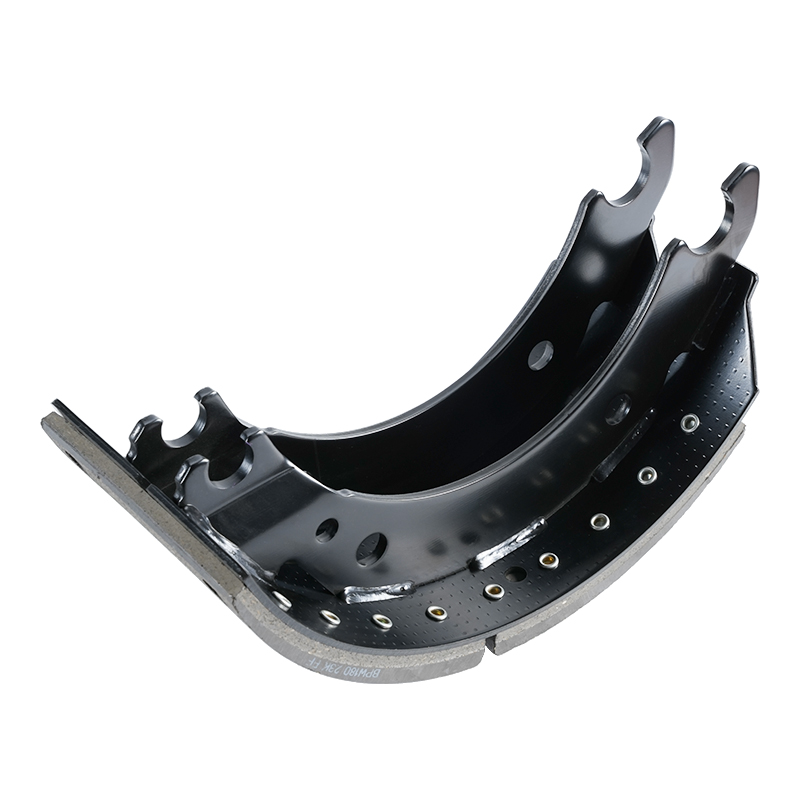
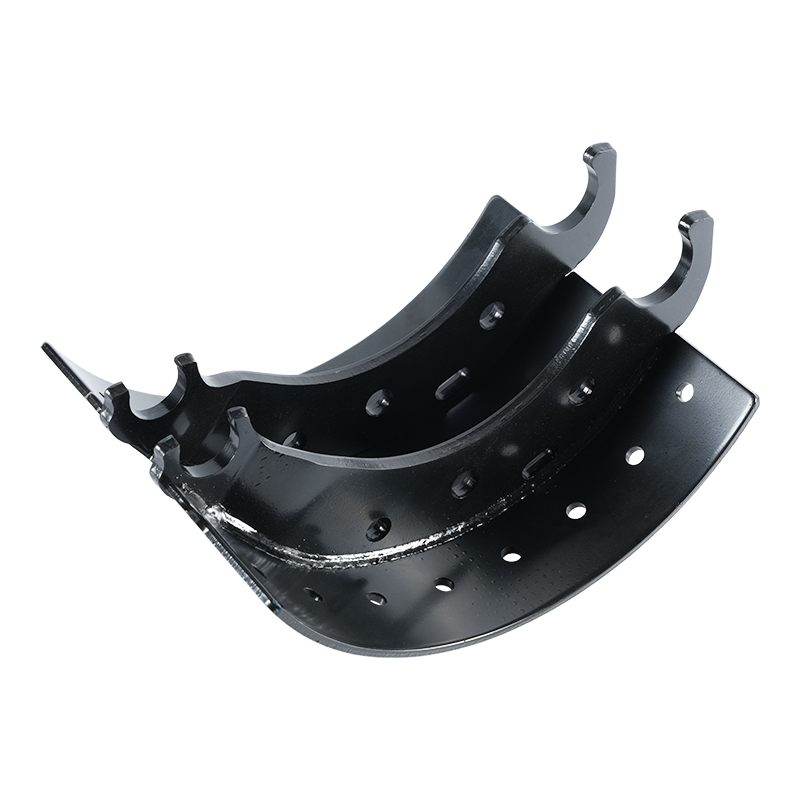
Most heavy-duty shoes begin as a steel platform with one or more webs welded to the back. The platform carries the lining; the web carries the roller holes, the anchor pin seat and the spring slots. That means thickness tolerance, weld placement and platform flatness matter far more than the eye can judge. A platform that is slightly out of true will not sit evenly against the drum, and a shoe that rocks on its anchor will wear its lining in a wedge instead of a clean arc. Good shoes are inspected for exactly this before they leave the line.
The friction lining
The lining is the consumable. It turns motion into heat, then hands that heat to the drum and the air. Its friction coefficient, its behaviour when hot and how aggressively it abrades the drum all come out of the mix, whether the binder and fibres are organic, semi-metallic or something in between. Asbestos-free material is now the baseline in Europe and North America, and it should be a documented specification rather than a claim on a box.
American and European Patterns
The aftermarket is dominated by two families, American and European patterns, and they are not interchangeable even when the drum diameter looks identical. The choice is settled by the axle, not by preference or price, so the sensible starting point is an axle or OEM part number and a drum measurement.
| Consideration | American pattern | European pattern |
|---|---|---|
| Actuation | S-cam acting on a roller in the web | S-cam or wedge, depending on the axle |
| Lining shape | Wide, thick blocks, often in two halves | Narrower, sometimes tapered at the ends |
| Web and roller geometry | Larger roller bore, wider web spacing | Tighter roller and anchor spacing |
| Typical vehicles | Long-haul tractors and trailers | Semi-trailers and rigid trucks |
| What to verify first | Shoe number, lining width, roller size | Axle platform, drum diameter, shoe width |
Fit a shoe with the wrong roller bore, web offset or lining width and it will either refuse to seat or quietly ruin the drum within a few thousand kilometres. Neither outcome is cheap.
Matching the Lining to the Duty Cycle
Friction material is where most of the real decision-making happens, because two shoes that look the same on the bench can behave very differently on a descent.
- Non-asbestos organic. Quiet and gentle on drums, well suited to stop-start delivery work and lighter combinations; it can fade when worked hard for long periods.
- Semi-metallic. Strong bite and good heat tolerance for heavy loads and mountain routes, at the cost of faster drum wear.
- Fibre-reinforced and ceramic blends. A middle ground with more stable friction when hot, often chosen for mixed regional and long-haul duty.
Whatever the compound, keep both shoes on an axle identical. Mixing one semi-metallic shoe with an organic one makes the brake pull and leaves one drum running hotter than the other, which shows up later as a cracked drum or a glazed lining.
Reading Wear and Knowing When to Replace
Brake shoes rarely fail without warning. The warning is written in the wear pattern, and it is worth reading before the lining is gone.
- Pull the drum and measure lining thickness at the thinnest point, not in the middle where it always looks healthier.
- Look at the wear pattern. Taper, a step or a bright glaze line all point to anchor pin, roller or spring problems rather than lining quality.
- Inspect the platform for cracks along the weld line and the roller holes for ovality.
- Check return and hold-down springs for stretch and free length; a tired spring drags the shoe and cooks the lining.
- Measure drum diameter and look for scoring, heat cracks and out-of-round.
- Replace in axle pairs and renew the hardware at the same time.
As a rule of thumb, a riveted lining is finished once it wears close to the rivet heads, and a bonded lining once the friction material is down to a few millimetres above the platform. Waiting beyond that risks a metal-to-metal contact that takes the drum with it.
Fitment, Installation and Break-In
A shoe that fits is not the same as a shoe that works. On a typical S-cam axle the job runs in a fixed order: clean and inspect the drum, check the cam, bushings and slack adjuster, dry-fit the shoe on the anchor pin, confirm roller contact, then fit springs and set adjustment. Skipping the dry fit is the most common reason a new set runs hot from the first trip.
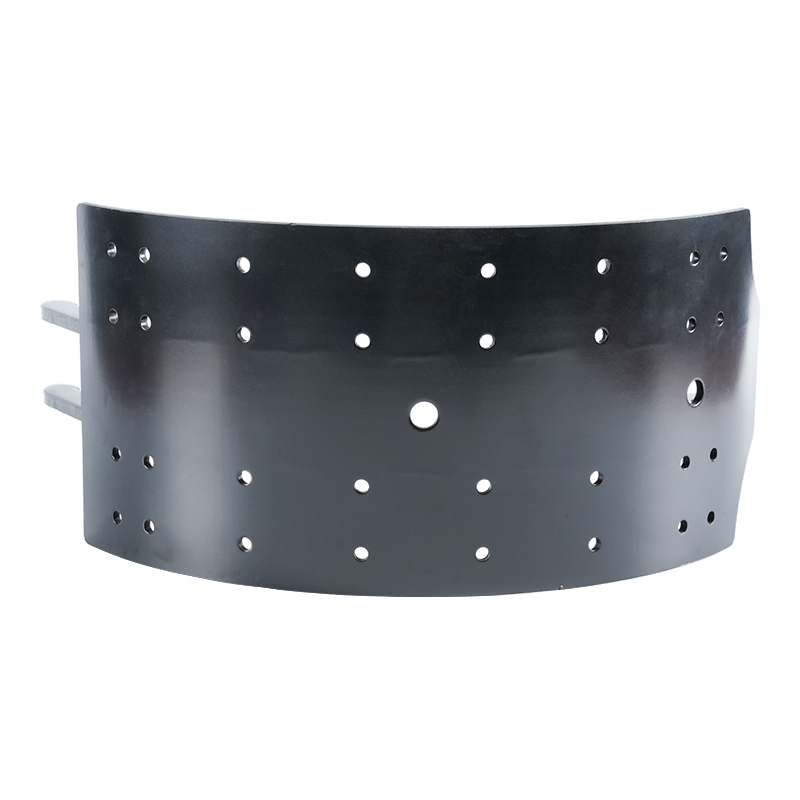 OEM 4515Q American-Type Heavy Truck Brake ShoeOEM American-pattern heavy truck brake shoe; the 4515Q reference suits North American tractor and trailer work and requires matching roller bore and lining width.View Product →
For North American tractor and trailer work, the 4515Q American pattern shoe is a familiar reference, and matching the roller bore and lining width to the original is what keeps the brake balanced side to side.
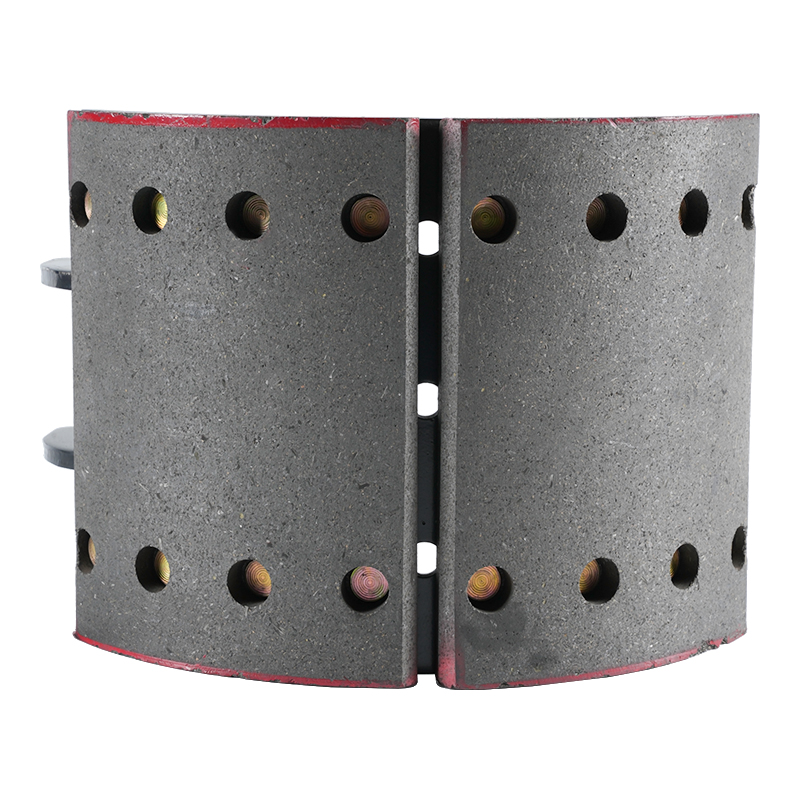 OEM BPW 300×200 European Semi-Trailer Brake ShoeOEM European brake shoe for BPW 300×200 applications; precise fit matters on semi-trailer axles where tighter anchor and roller spacing can cause binding.View Product →
On European semi-trailer axles, the 300 by 200 platform is equally common; here the anchor and roller spacing is tighter, so a shoe that is even slightly off specification will bind rather than float.
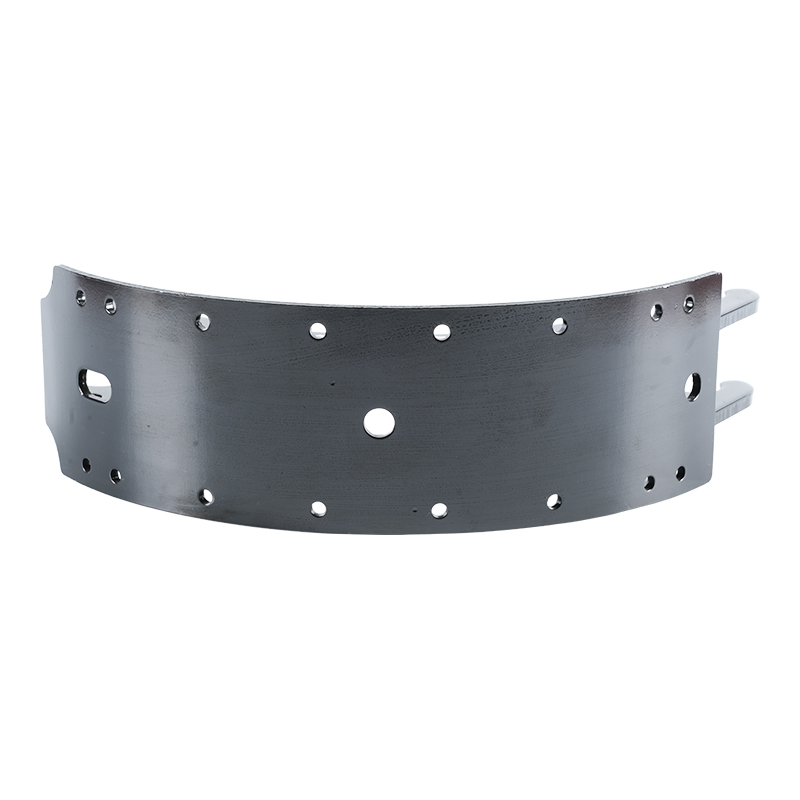 OEM 4702 North American Semi-Trailer Brake Shoe AssemblyPre-matched brake shoe assembly for North American semi-trailers, supplied with lining and hardware so workshops can verify the drum and set adjustment.View Product →
Where fitting time is tight, a pre-matched assembly such as the 4702 for North American semi-trailers removes the guesswork: shoe, lining and hardware arrive as one unit, so the workshop only has to verify the drum and set the adjustment.
New linings also need bedding in. For the first few hundred kilometres, keep stops moderate, avoid repeated hard braking from speed and let the drums come up to temperature gradually. After the first week, re-check adjustment and re-torque the fixings. A lining that is bedded properly lasts noticeably longer than one that is abused on its first loaded run.
Sourcing for Consistency, Not Just Price
The quiet cost of brake shoes is variation. A batch that is two millimetres off, or a compound that changed without notice, creates comebacks that no unit price can offset. That is why it pays to buy from a manufacturer who runs the same stamping, welding and inspection process across both pattern families rather than trading whatever is available that month.
We have been building stamped and welded brake shoes in Anji, Zhejiang since 2010, and our catalogue covers American pattern shoes from the 1308E through to the 4725, European platforms, matched assemblies for tractors and semi-trailers, and repair kits for the same references. You can read more about our manufacturing background and factory, or work through our practical guide to choosing, installing and maintaining industrial brake shoes if you are training a workshop team.
If you are specifying for a fleet or a distributor range, send us the axle reference and drum measurement rather than a photo of the old shoe. It is a faster conversation and a far more reliable one.
Industrial brake shoes are inexpensive relative to what they protect, and that is exactly why they deserve a disciplined approach. Identify the axle, match the pattern and the compound, inspect the hardware while the drum is off, bed the lining in gently and check adjustment afterwards. Do those things and the brake system stops being a source of surprises and simply becomes part of the maintenance routine.

 Home
 +86-158-6900-2386 / +86-0571-61075636
 zjlrqp@163.com
 No. 518, Nanhu Road, Tianzihu Town, Anji County, Zhejiang Province, China

Copyright © Zhejiang Langrun Auto Parts Co., Ltd. All rights reserved. Heavy-Duty Brake Shoe Manufacturer in China

