


 Eng

 中文简体

 Home / News / Industry News / Stamping Brake Shoe Guide: Manufacturing, Fitment, and Heavy Truck Checks
Stamping Brake Shoe Guide: Manufacturing, Fitment, and Heavy Truck Checks
 2026.11.12
 Industry News
A stamped brake shoe looks simple until you have to make thousands of them fit the same drum, hold the same lining, and stop the same load. In heavy truck and trailer work, steel grade, forming accuracy, weld quality, and the details around the roller and anchor ends decide whether a shoe performs. At Zhejiang Langrun Auto Parts, we have focused on stamped and welded brake shoes since 2010. This guide explains what stamping brake shoes are, how they are made, and what buyers should check before choosing one.
Content
- 1 What Is a Stamping Brake Shoe?
- 2 How Stamping Brake Shoe Manufacturing Works
- 3 Why Stamped Brake Shoes Remain Popular in Heavy-Duty Applications
- 4 Fitment and Selection: Matching the Shoe to the Axle and Duty Cycle
- 5 Quality Checks Before You Fit a Stamped Brake Shoe
- 6 Maintenance and Replacement Signals
What Is a Stamping Brake Shoe?
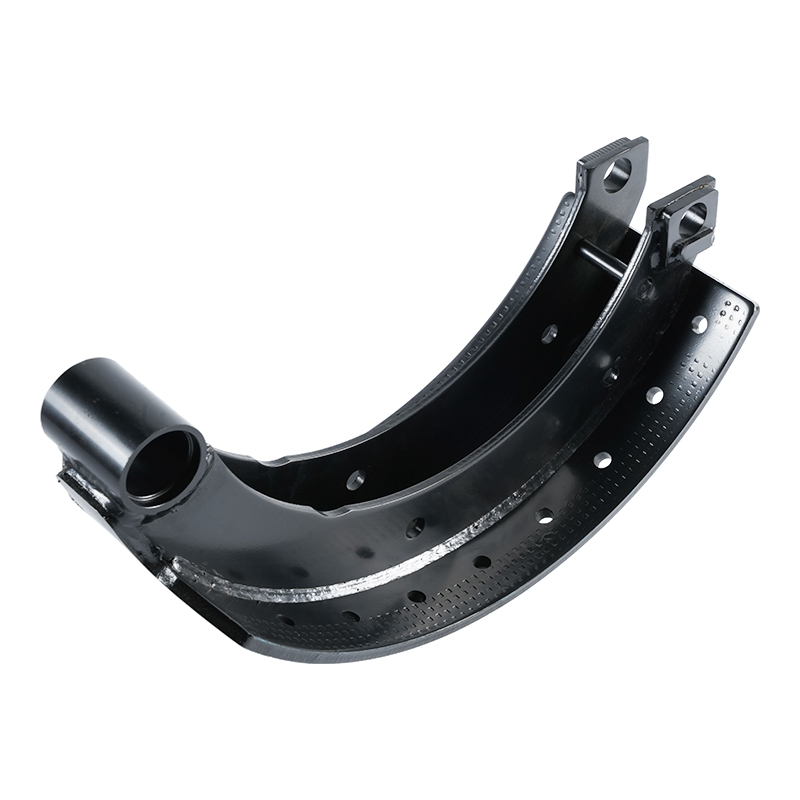
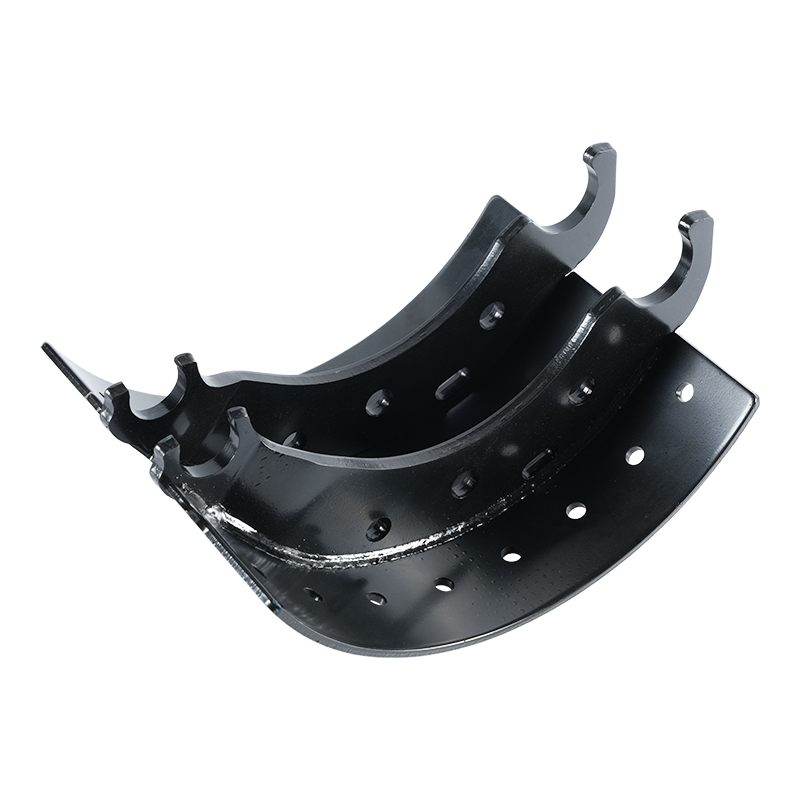
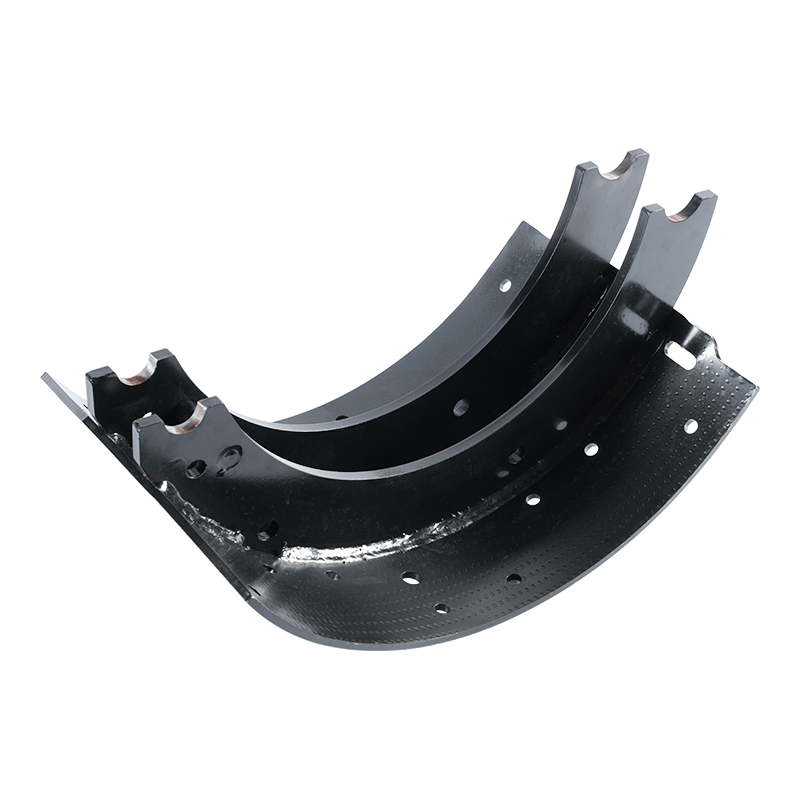
A stamping brake shoe is a drum brake shoe whose steel rim and web are formed from strip or plate by punching, piercing, and pressing, then joined by welding. The friction lining is bonded or riveted later. Unlike a cast shoe, which begins as molten iron and is machined, a stamped shoe is built from formed steel. Stamped shoes are common in heavy truck, semi-trailer, and trailer applications because they can be produced with consistent dimensions and relatively low weight.
The shoe is the steel platform that holds the lining and transfers braking force to the drum. It must be stiff enough to resist bending, round enough to match the drum radius, and accurate enough to keep lining contact even. Those three requirements drive every decision in the press shop.
| Feature | Stamped and welded shoe | Cast shoe |
|---|---|---|
| Starting material | Steel strip or plate | Cast iron |
| Weight | Usually lighter for the same duty | Usually heavier |
| Repeatability | Good when press and weld fixtures are controlled | Depends on casting and machining control |
| Common use | Heavy truck, trailer, and semi-trailer drum brakes | Various drum brake applications |
| Repair checks | Welds, radius, rivet or bond condition | Cracks, wear, and machining limits |
Neither design is automatically better. A stamped shoe with poor weld penetration is worse than a well-made cast shoe. The right choice depends on axle load, duty cycle, drum design, and the lining system.
How Stamping Brake Shoe Manufacturing Works
The process is not just pressing a curve into steel. Each step affects fit, strength, and lining life.
- Material selection. Steel strip or plate is checked for thickness, yield strength, and elongation. Consistent material matters because a small change in springback can change the finished radius.
- Blanking and piercing. Blanks are cut and holes are punched for rivets, springs, rollers, and anchor pins. Hole position affects how the shoe sits on the backing plate.
- Forming. The rim and web are pressed into shape. The tool must compensate for springback so the final radius matches the drum.
- Welding. The web is welded to the rim in a fixture. Heat input is controlled to prevent distortion. Too much heat can pull the shoe out of round; too little penetration can leave a weak joint.
- Lining attachment. The friction lining is bonded or riveted. Surface preparation, adhesive cure, and rivet depth all matter.
- Finishing and inspection. Burrs are removed, the shoe may be coated, and key dimensions are checked: radius, width, hole position, weld quality, and lining bond.
We cover the full sequence in our article on stamping brake shoe manufacturing. The key point is that the press and the weld fixture must work together. If the web moves during welding, the shoe may fit the drum but sit off-center, causing uneven wear and heat buildup.
For buyers who fit their own friction material, a bare shoe such as the 4551 American brake shoe without lining is a useful reference point.
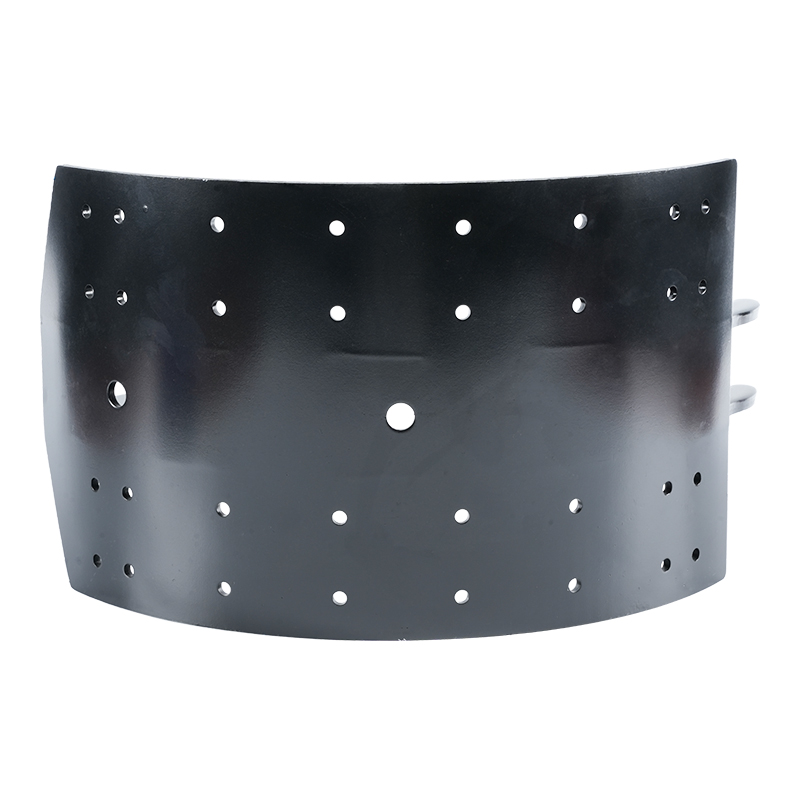 OEM 4551 American Brake Shoe Without LiningA bare American-style brake shoe for buyers fitting their own friction material, suitable as a reference for heavy-duty and commercial vehicle applications.View Product →
Why Stamped Brake Shoes Remain Popular in Heavy-Duty Applications
Stamped and welded shoes remain popular for practical reasons. They are usually lighter than cast shoes, can be produced with good repeatability, and allow stiffening ribs and locating features to be formed into the part. Common advantages include weight control, consistent fit, design flexibility, and straightforward inspection.
- Weight control. Lower shoe weight can reduce unsprung mass and make brake work easier for technicians.
- Consistent fit. Well-controlled press and weld fixtures help keep radius and hole position within tolerance.
- Design flexibility. Stamped features can be added to suit different axle platforms and lining systems.
- Serviceability. Stamped shoes can be inspected for weld condition, roundness, and rivet or bond integrity.
The limits matter too. Stamped shoes depend on good weld quality and stress control. They are not the best answer for every severe-duty application, and they should not be selected by price alone. A shoe that is slightly out of round can cause hot spots, uneven lining wear, and repeat labor. For fleet buyers, the cost of a poor shoe shows up later in downtime and drum wear.
Fitment and Selection: Matching the Shoe to the Axle and Duty Cycle
Stamping brake shoes are not interchangeable just because they look similar. American and European patterns differ in width, radius, web shape, roller ends, anchor pin details, and lining attachment. In our catalog you will see American patterns for heavy trucks and trailers, and European patterns for BPW, SAF, and Volvo-style axles. The model name is only the starting point.
- Check the drum diameter and maximum wear limit before ordering shoes.
- Confirm whether the application uses a bare shoe, a lined shoe, or a full assembly.
- Match the roller ends, anchor pin, and cam contact points to the existing hardware.
- Confirm lining type and thickness for the duty cycle, not just the shoe number.
- Inspect springs, bushings, and drums as part of the same job; a new shoe on worn hardware will not last.
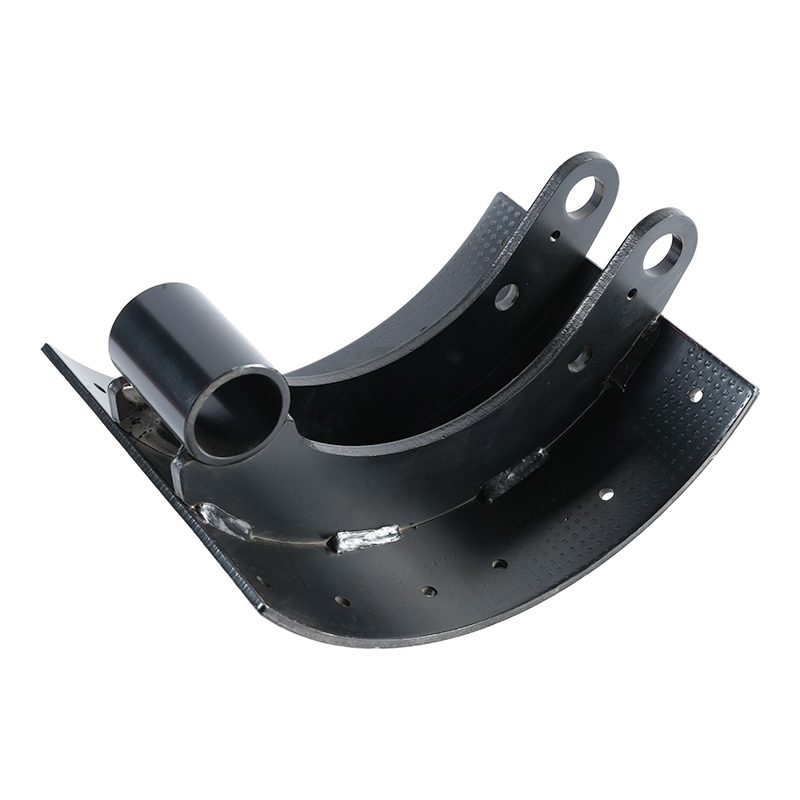
For a European semi-trailer or truck application, the BPW 300-200 European brake shoe is one example of a stamped shoe built for that platform. The small forming details matter as much as the headline specification.
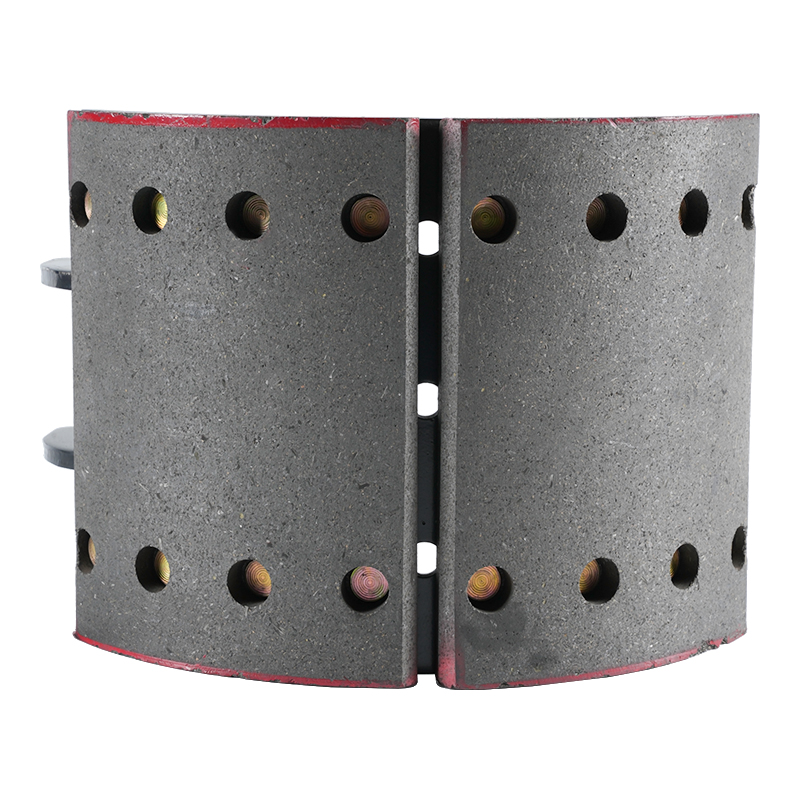 BPW 300*200 European Brake ShoeA stamped European brake shoe for semi-trailer and truck platforms, with high-strength welding and stable dimensions for commercial vehicle braking applications.View Product →
Quality Checks Before You Fit a Stamped Brake Shoe
Before fitting, check the drum and hardware, then the shoe. A few simple checks catch most problems early.
- Check the radius. Place the shoe against the drum or use a radius gauge. The lining should contact the drum evenly, not only at the center or the ends.
- Inspect the welds. Look for undercut, porosity, cracks, and gaps between the web and rim. A weak weld can let the shoe flex under load.
- Check the lining bond or rivets. For bonded linings, look for separation or uneven adhesive. For riveted linings, confirm rivet depth and that the lining is not cracked around the rivets.
- Test hole alignment. Rollers, anchor pins, and springs should fit without forcing. If a hole is off, do not enlarge it in the workshop.
A stamped shoe that passes these checks is still only part of the system. Drum condition, spring tension, slack adjuster settings, and wheel-end alignment all affect brake performance. When a truck comes in with uneven lining wear, the shoe is often the messenger rather than the root cause.
Maintenance and Replacement Signals
Stamped brake shoes usually give warning before failure: lining near the limit, cracks, loose rivets, drum scoring, or a bent shoe. A dragging brake or hot drum can also point to shoe or hardware trouble. Replace shoes in axle sets and inspect drums and hardware at the same time. Do not judge a stamped shoe by appearance alone; check weld, radius, lining attachment, and hardware fit.
At Zhejiang Langrun Auto Parts, we have spent years working with stamped and welded brake shoes for heavy trucks, trailers, and engineering vehicles. A good part is not just about the drawing; it is about how the steel forms, how the weld pulls, and how the shoe sits against the drum. If you are sourcing stamping brake shoes for a fleet program, trailer line, or axle platform, start with a clear specification. You can learn more about our background on our about page.

 Home
 +86-158-6900-2386 / +86-0571-61075636
 zjlrqp@163.com
 No. 518, Nanhu Road, Tianzihu Town, Anji County, Zhejiang Province, China

Copyright © Zhejiang Langrun Auto Parts Co., Ltd. All rights reserved. Heavy-Duty Brake Shoe Manufacturer in China

