


 Eng
Eng 
 中文简体
中文简体
 Home / News / Industry News / Stamping Brake Shoe Manufacturing: How Stamped Truck Brake Shoes Are Made
 Stamping Brake Shoe Manufacturing: How Stamped Truck Brake Shoes Are Made
 2026.09.23
 Industry News
In a drum brake system, the brake shoe is the curved carrier that holds the friction lining and presses it against the inside of the rotating drum. When a buyer searches for a stamping brake shoe, the question behind the search is usually practical: how is the shoe actually formed, and can a stamped part stand up to heavy-duty service? The short answer is that stamping is a cold-forming route in which the shoe's web and table are cut and shaped from steel sheet and then joined into one rigid, dimensionally consistent unit. For heavy trucks, trailers, and semi-trailers, that consistency is often exactly what fleet maintenance teams and axle builders are looking for.
Content
- 1 What a Stamping Brake Shoe Really Is
- 2 The Stamping Sequence, Step by Step
- 3 Stamped and Welded Shoes Compared with Cast Shoes
- 4 Why Stamping Suits Heavy Truck and Trailer Braking
- 5 Matching a Stamped Shoe to American and European Platforms
- 6 Quality Control Points That Decide Whether a Stamped Shoe Lasts
- 7 Specifying a Stamping Brake Shoe for Your Application
What a Stamping Brake Shoe Really Is
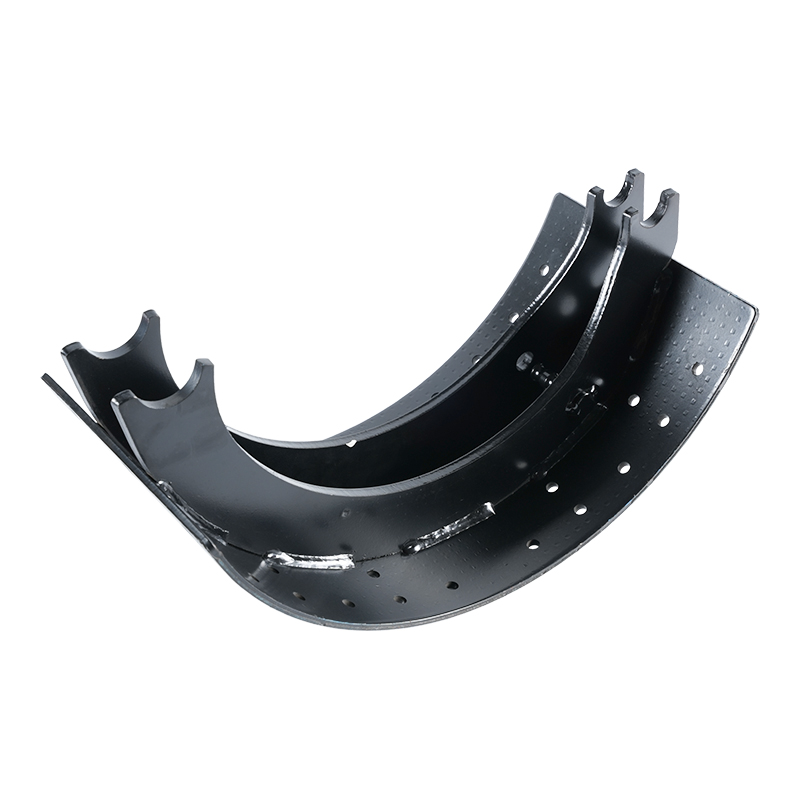
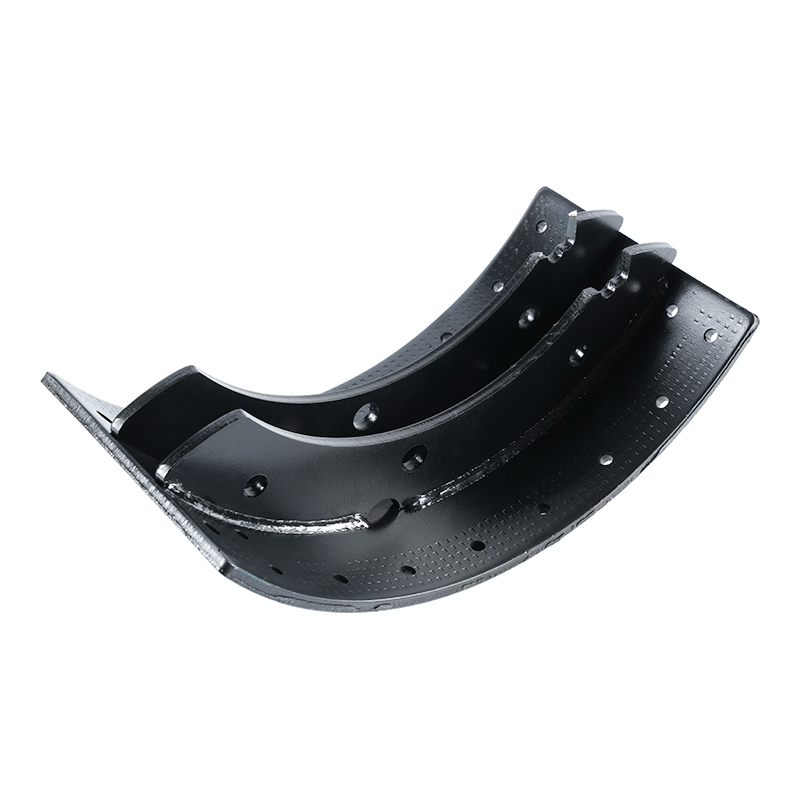
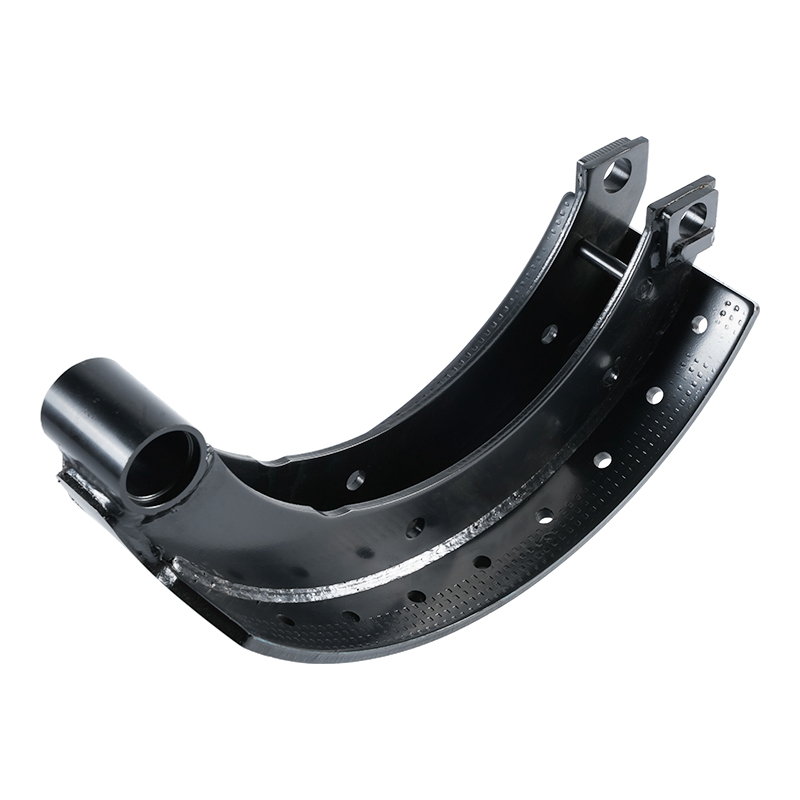
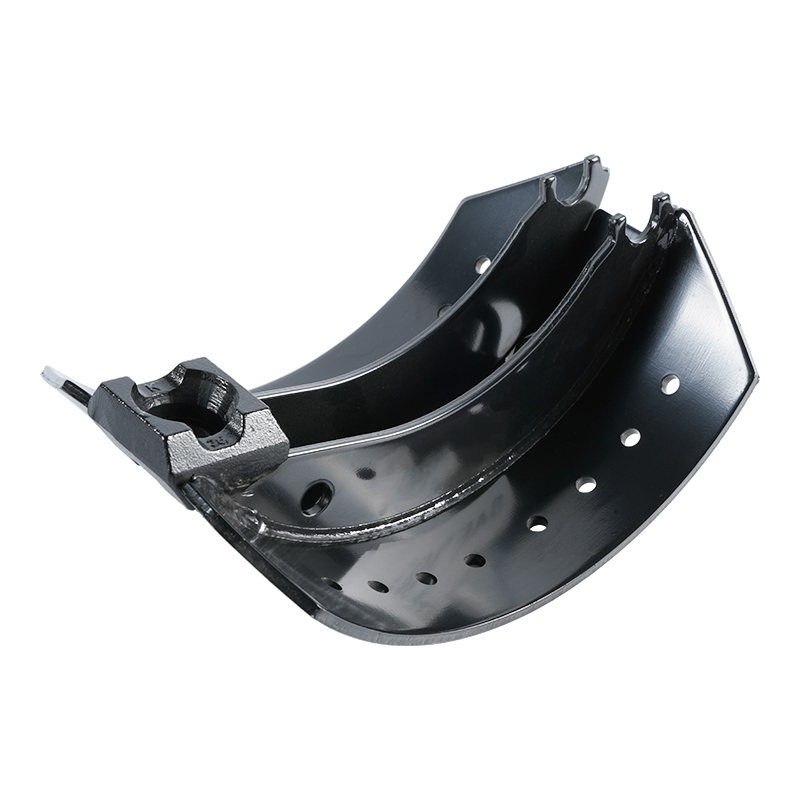
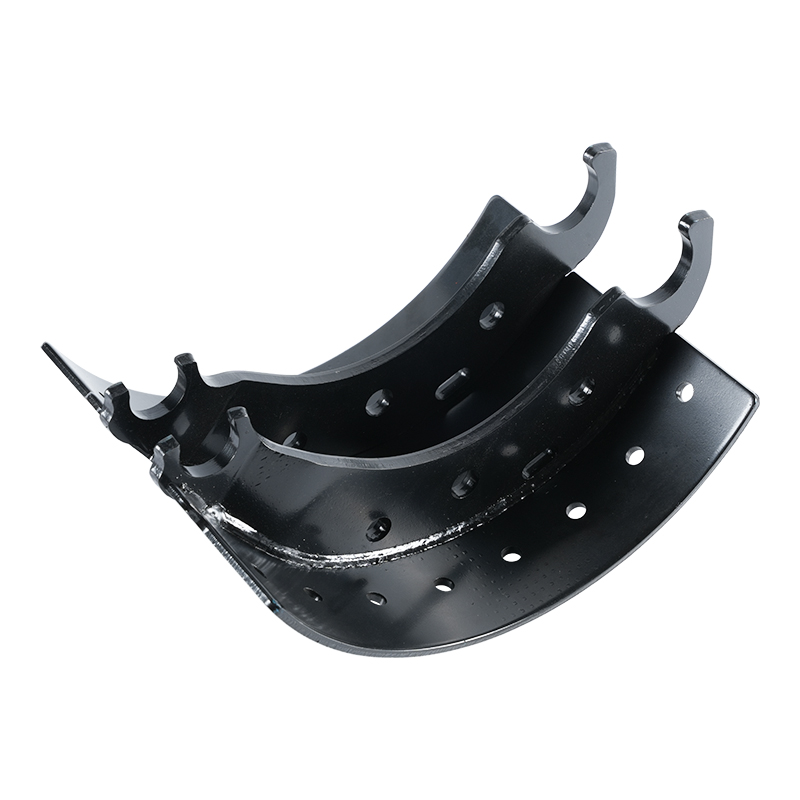
A heavy-duty drum brake shoe is rarely a single piece of steel. In the stamped route it is normally two: the table, which is the curved rim that carries the friction lining, and the web, the central rib that locates the shoe on the anchor pin and transfers braking force to the S-cam, wedge, or other apply mechanism.
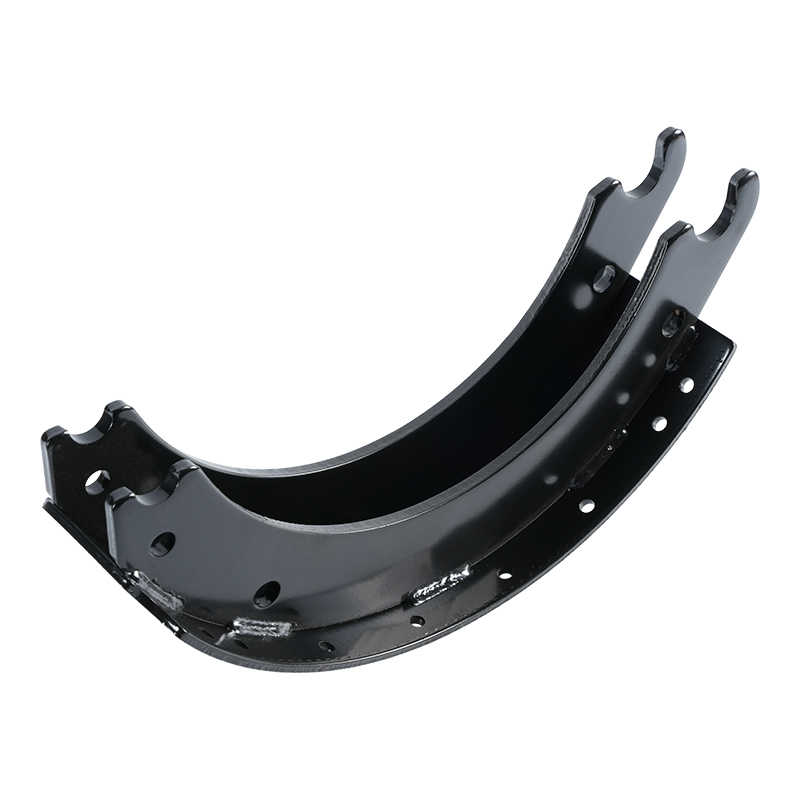
Both parts begin as steel sheet. A net-shaped web blank is precision stamped with a series of tabs projecting outward from its semi-circular edge. The matching table is stamped with apertures at the same spacing, then bent into a semi-cylindrical segment. When the two are brought together, the tabs enter the apertures and hold the assembly in position. A hot staking or welding operation then joins them permanently. In a well-controlled process the finished joints sit flush with the outer surface of the table, so the lining can be bonded or riveted onto a clean, even arc instead of a surface interrupted by protruding welds.
The Stamping Sequence, Step by Step
Understanding the order of operations helps when comparing suppliers, because each step leaves its own fingerprint on the finished shoe.
- Steel selection. Coil grade and thickness determine how much load the web and table can carry before they deflect.
- Blanking and piercing. The web profile, the table outline, and the tab and aperture pattern are cut in one or two press operations.
- Bending and forming. The table is rolled into its semi-cylindrical arc while the web keeps the rib profile that gives it stiffness.
- Fixture assembly. Web tabs and table apertures interlock, temporarily fixing the geometry before permanent joining.
- Permanent joining. Hot staking or projection welding locks every tab-and-aperture pair, turning two flat parts into one rigid shoe.
- Radius and cam control. The outer arc, the anchor pin slot, and the roller or cam contact faces are checked so the shoe seats correctly in the brake.
- Surface preparation. Shot blasting and a protective coating prepare the steel for storage and for lining attachment.
- Lining attachment. For a brake shoe assembly, non-asbestos lining is riveted or bonded on; a bare shoe stops at the previous step.
Stamped and Welded Shoes Compared with Cast Shoes
Both construction methods are still in service, and the choice usually comes down to volume, weight targets, and how much design flexibility a platform needs.
| Factor | Stamped and Welded Shoe | Cast Shoe |
|---|---|---|
| Forming route | Sheet blanked, pierced, bent, then staked or welded | Molten metal poured into a mold |
| Wall thickness | Uniform, set by the coil | Varies with casting and machining |
| Part weight | Generally lower for the same duty | Typically higher |
| Internal defects | No porosity in sheet steel | Possible shrinkage or gas voids |
| Design changes | Tooling adjustment for a new platform | New pattern and tooling |
| Typical fit | High-volume truck, trailer, and semi-trailer platforms | Low-volume or legacy applications |
Why Stamping Suits Heavy Truck and Trailer Braking
Heavy-duty braking is a repeated, high-load cycle rather than a single emergency event. A loaded tractor-trailer may brake thousands of times a week, and every application puts the shoe under mechanical load and heat. Stamped and welded construction answers that duty in several ways.
- Consistent geometry. Because the shoe is formed with dedicated tooling, the arc radius and mounting features stay within tight tolerances from one batch to the next.
- Predictable weight. Uniform steel thickness keeps unsprung mass stable, which matters for both ride quality and lining wear.
- No casting porosity. Sheet steel has no internal voids, so there is no hidden defect waiting to open up under load.
- Fast platform variants. Moving from one axle platform to another usually means adjusting tooling rather than creating a new casting pattern.
- Volume economics. At the production volumes typical of truck and trailer brake shoes, stamping spreads tooling cost across a large number of parts.
Matching a Stamped Shoe to American and European Platforms
Because stamped shoes are tooled for specific fitments, the practical work of choosing one starts with the axle platform rather than with the shoe itself. In North America, common naming patterns use numbers such as 1308E, 140, 1443E, 156, 4515Q, 4516, 4707, 4709, and 4725, which correspond to widely used heavy truck and trailer drum brake sizes. European platforms are usually identified by the axle or vehicle family, with BPW, SAF, and Volvo based fitments dominating semi-trailer and truck applications.
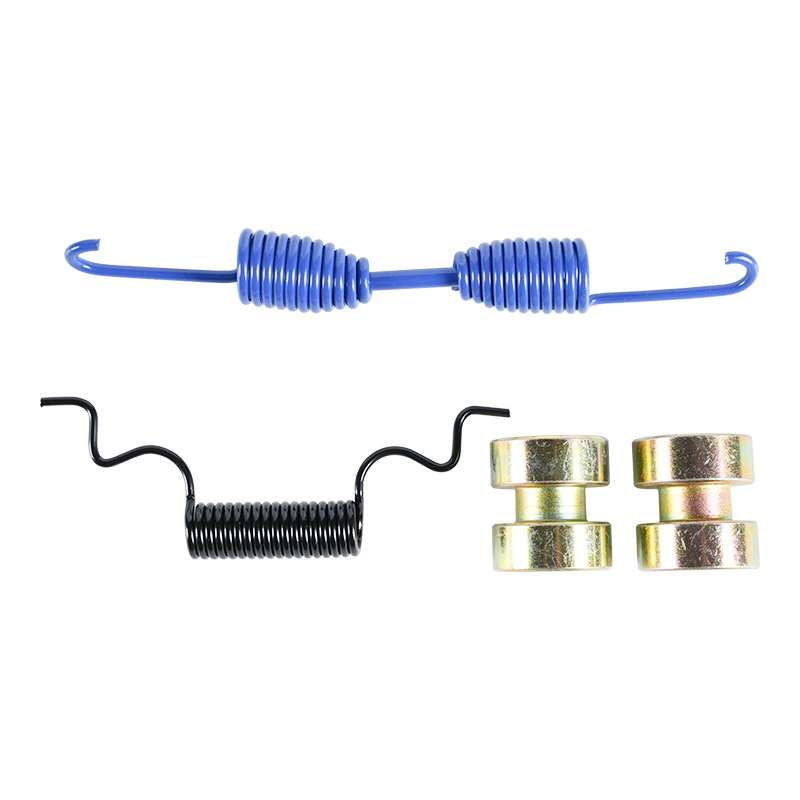
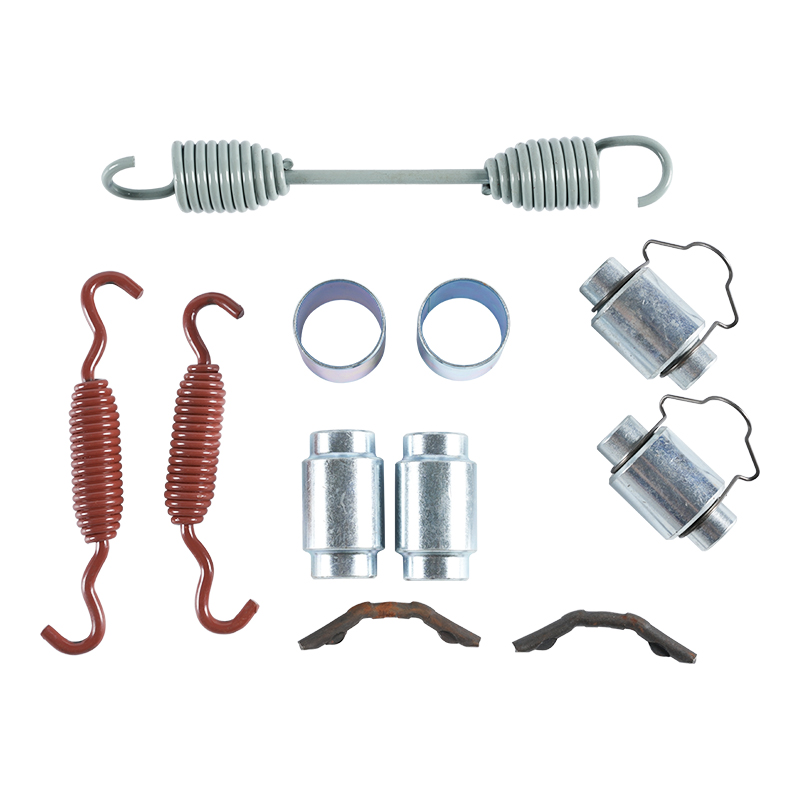
A single platform normally supports more than one supply form. The same basic shoe can be ordered bare, so a workshop can rivet its own lining, or supplied as a complete assembly with the lining already attached. Repair kits bundle the shoe with the small hardware that wears alongside it, which keeps scheduled maintenance simple.
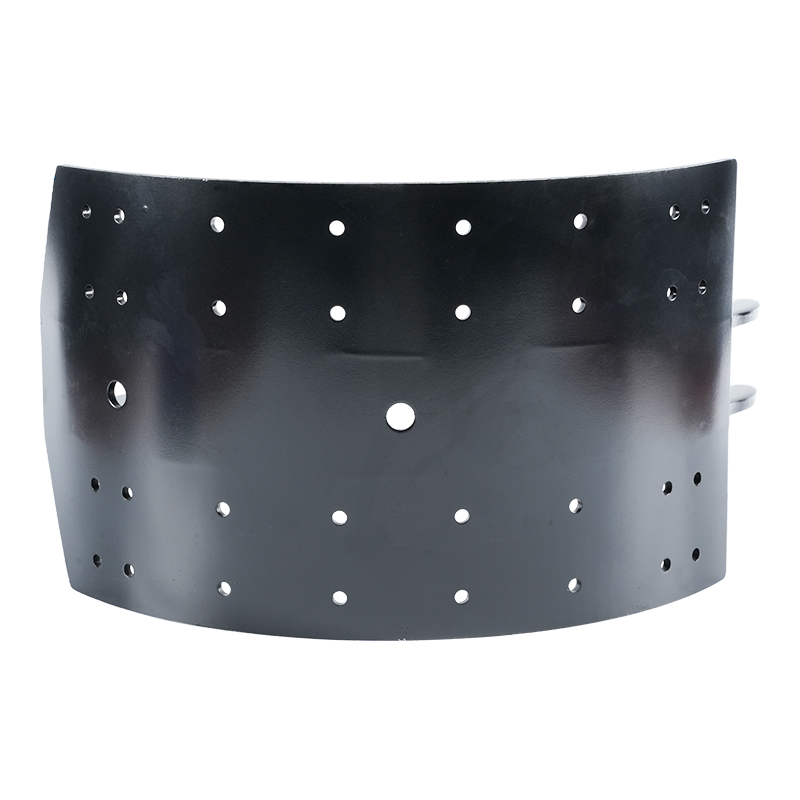 4551 American Brake Shoe without LiningThis model is commonly used in the south american market. The products we provide customers have high-strength welding, stable dimensions, sufficient support for the b...View Product →
Bare shoes such as the 4551 American pattern are the natural choice when the lining specification is fixed by the fleet or the rebuilder, and the workshop prefers to control friction material separately. When a complete unit is preferred instead, an assembly arrives with the lining fitted and the radius already matched, which removes a bonding or riveting step from the service bay.
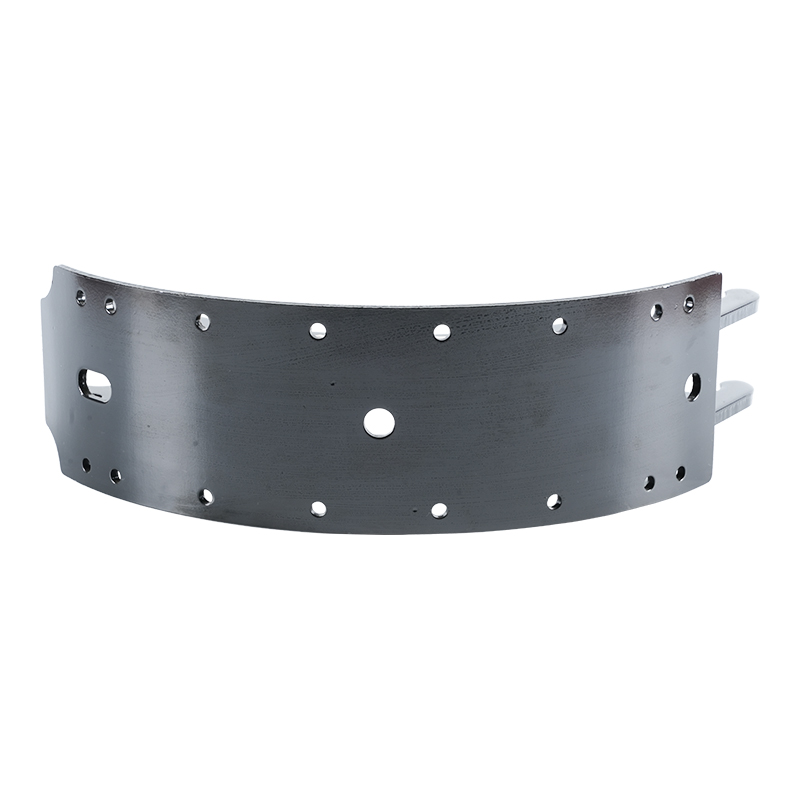 4702 North American Assembly Semi-trailer PartsThis model is commonly used in the north american market. We can customize brake pads suitable for customers according to different road conditions and driving environ...View Product →
The same logic applies on the European side. A BPW pattern shoe has to follow the geometry of that axle family closely, because the roller and anchor details are unforgiving of small deviations.
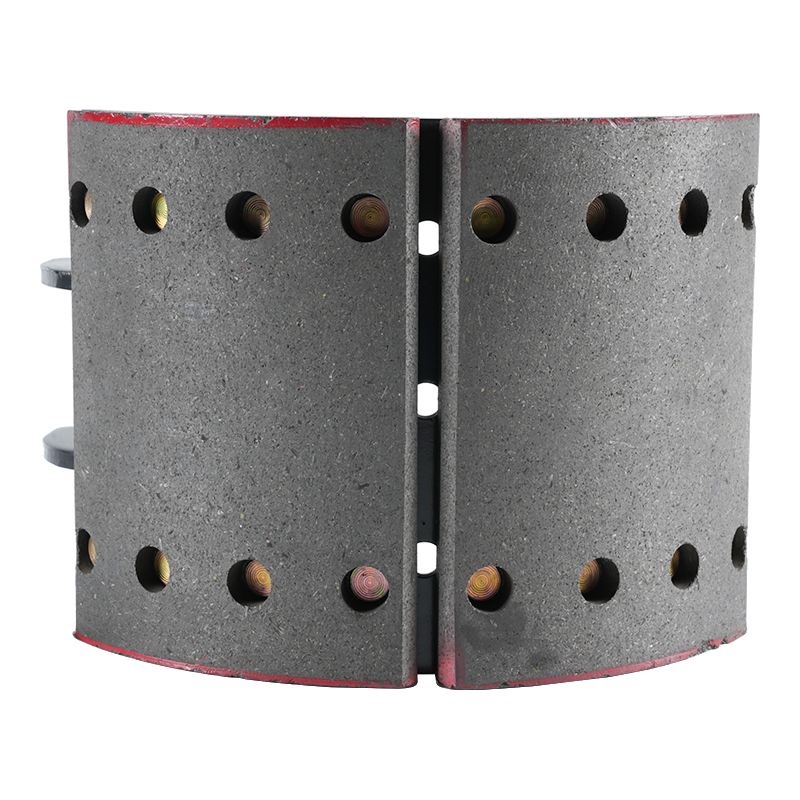 BPW 300*200 European Brake ShoeThis model is commonly used in the european market. The products we provide customers have high-strength welding, stable dimensions, sufficient support for the brake p...View Product →
Whichever group a fleet runs, the rule is the same: identify the platform, then decide whether a bare shoe, a lined shoe, or a repair kit is the right supply form for the job in front of you.
Quality Control Points That Decide Whether a Stamped Shoe Lasts
Two shoes can look identical on a shelf and behave very differently after 100,000 kilometres of hauling. The difference usually traces back to a handful of checkpoints:
- Steel grade and thickness verified on incoming coil, not assumed from the certificate.
- Tab and aperture fit checked before joining, so no joint depends on filler metal alone.
- Weld or stake integrity inspected visually and confirmed by destructive sampling.
- Outer radius and concentricity measured against the drum diameter the shoe will work with.
- Lining bond strength for assemblies, confirmed by shear testing rather than appearance.
- Bench and road simulation testing against the standards that European and American markets expect.
Suppliers who take this discipline seriously tend to document it, and seeing how brake shoe assembly manufacturing and quality control is organised inside a factory is a practical way to judge whether inspection is a routine or an afterthought.
Specifying a Stamping Brake Shoe for Your Application
Before placing an order, it is worth working through a short checklist with the workshop or the parts manager, because most fitting problems trace back to a mismatch that was avoidable at the quotation stage.
- Identify the axle platform and drum size, not just the vehicle model year.
- Decide between a bare shoe, a lined shoe, and a repair kit.
- Confirm whether the lining must be non-asbestos to satisfy local rules.
- Match lining thickness and wear limits to the duty cycle the fleet actually runs.
- Check that the anchor pin slot, roller, and cam contact faces suit the existing brake hardware.
Get those five points right and the rest of the selection usually falls into place, because a brake shoe is designed around the brake it sits in rather than around a catalogue number.
Stamping a brake shoe is a simple idea executed with a great deal of precision: form two steel parts, interlock them, join them permanently, and hold the arc to a tolerance the drum can live with. Zhejiang Langrun Auto Parts Co., Ltd. has concentrated on stamped and welded brake shoe series since 2010, producing heavy truck, trailer, and engineering vehicle shoes along with non-asbestos linings, complete assemblies, and repair kits for American and European platforms. If you are specifying shoes for a fleet programme or a distribution range, it is worth looking at our brake shoe range and matching the part to the platform before anything else.

 Home
Home +86-158-6900-2386 / +86-0571-61075636
 zjlrqp@163.com
 No. 518, Nanhu Road, Tianzihu Town, Anji County, Zhejiang Province, China
Copyright © Zhejiang Langrun Auto Parts Co., Ltd. All rights reserved. Heavy-Duty Brake Shoe Manufacturer in China

