


 Eng
Eng 
 中文简体
中文简体
 Home / News / Industry News / Trailer Brake Shoe Guide: Fitment, Wear Checks and Sourcing Tips for Fleets
 Trailer Brake Shoe Guide: Fitment, Wear Checks and Sourcing Tips for Fleets
 2026.09.30
 Industry News
Ask a maintenance manager what keeps a loaded trailer under control on a long descent, and the conversation quickly moves past the tractor. Trailer brake shoes sit at the very end of the air brake chain, where a curved piece of stamped steel and a friction lining have to convert pneumatic pressure into predictable stopping force. Get them right and the trailer tracks quietly behind the cab. Get them wrong and the trailer starts steering the truck.
We have been stamping and welding heavy-duty brake shoes since 2010, and most of the questions that reach our desk are not about metallurgy. They are about fitment, wear, and how to keep a mixed fleet of American and European axles stopping the same way. This guide collects those answers in one place.
Content
- 1 What a Trailer Brake Shoe Actually Does
- 2 American and European Trailer Brake Shoe Platforms
- 3 Matching a Trailer Brake Shoe to the Axle
- 4 European Axle Platforms: BPW, SAF and Volvo
- 5 Warning Signs That a Trailer Brake Shoe Is Finished
- 6 What the Lining Compound Brings to the Equation
- 7 Replacing a Trailer Brake Shoe Safely
- 8 Bare Shoes, Assemblies and Repair Kits
- 9 Sourcing Trailer Brake Shoes for a Fleet Programme
What a Trailer Brake Shoe Actually Does
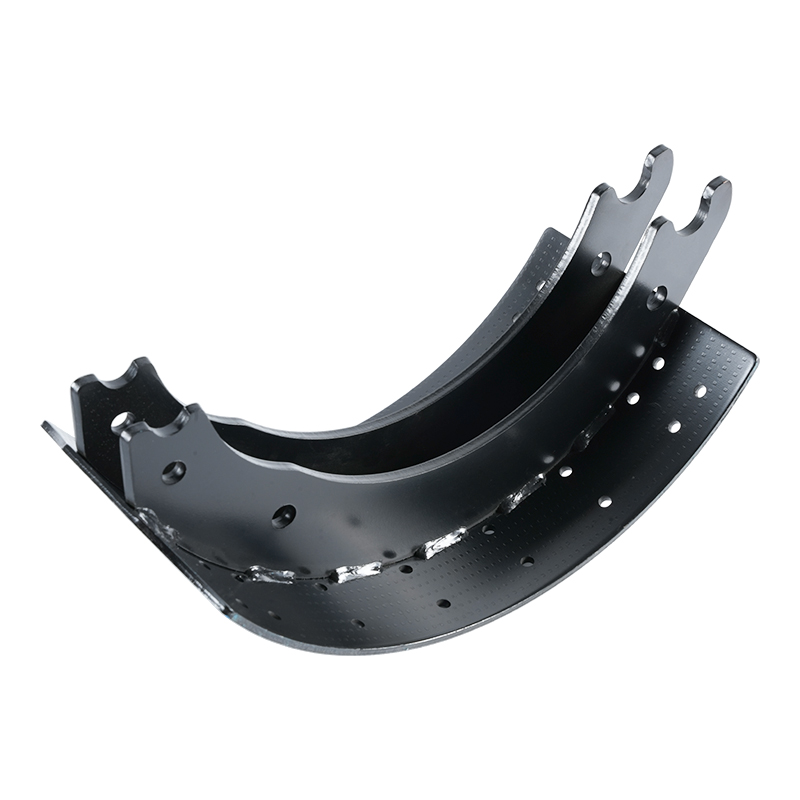
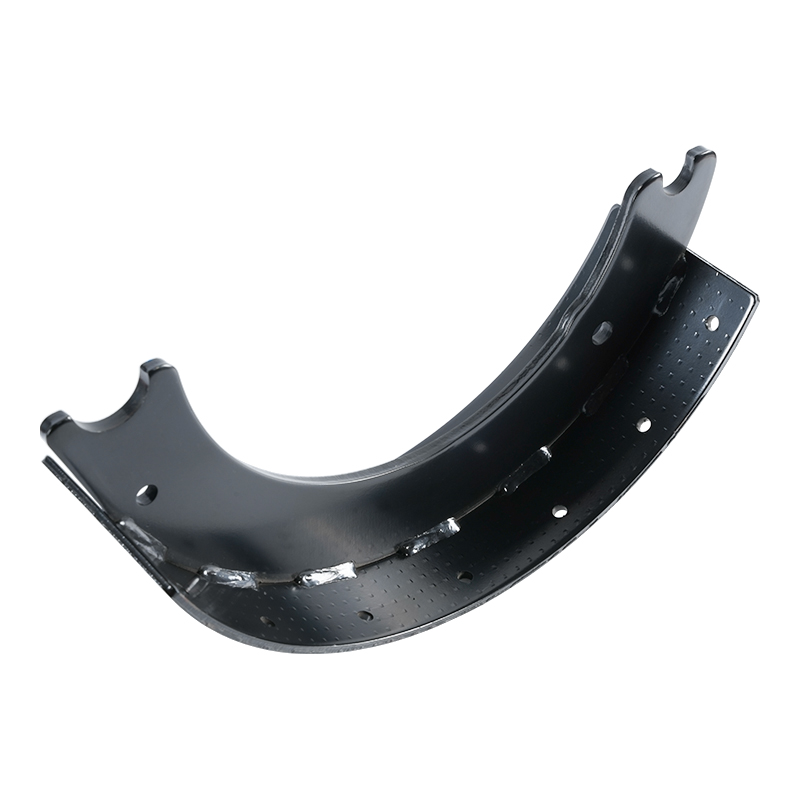
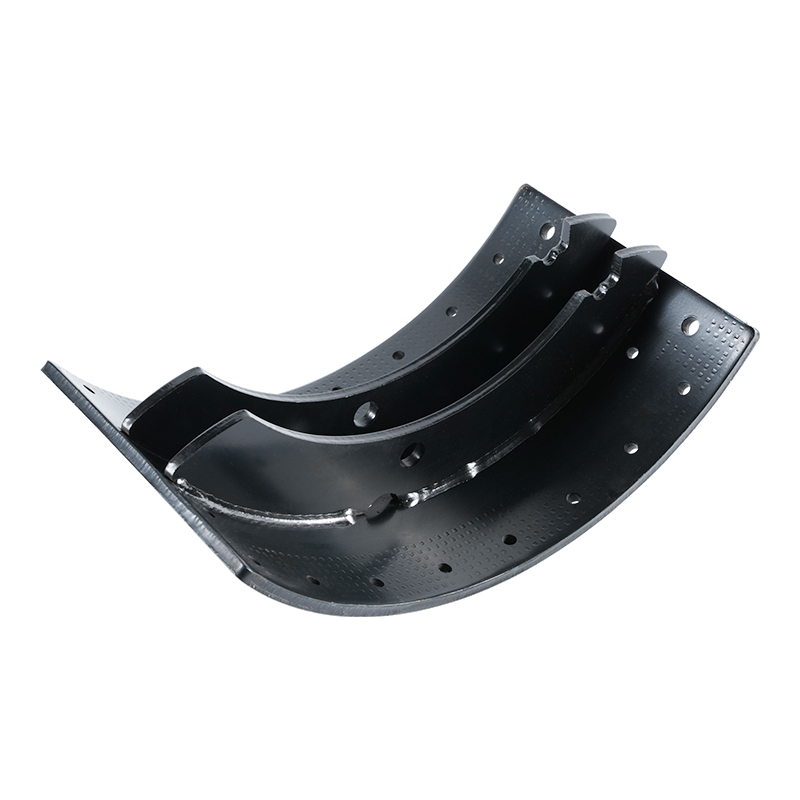
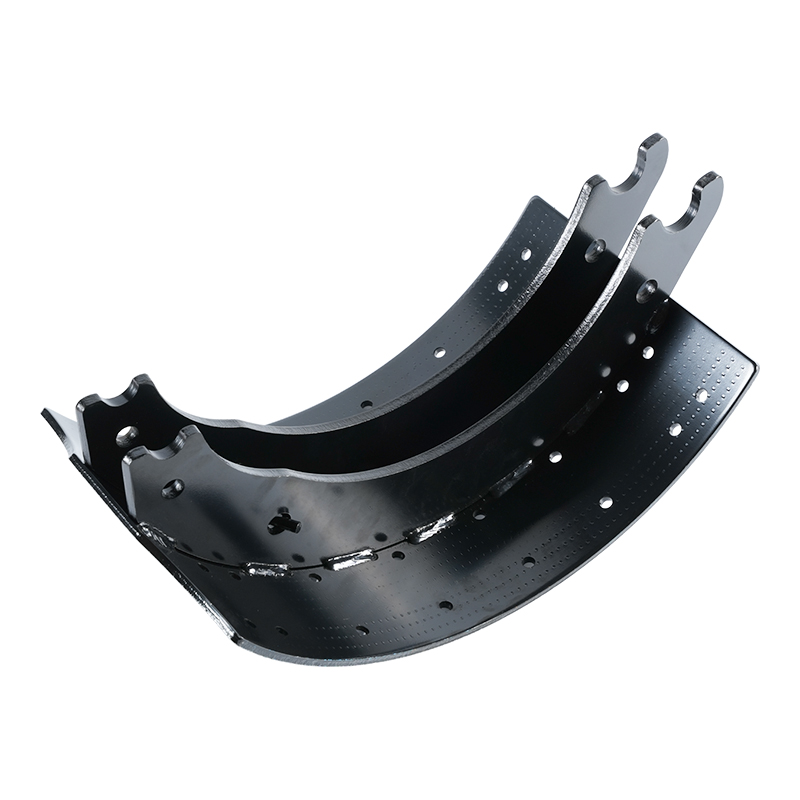
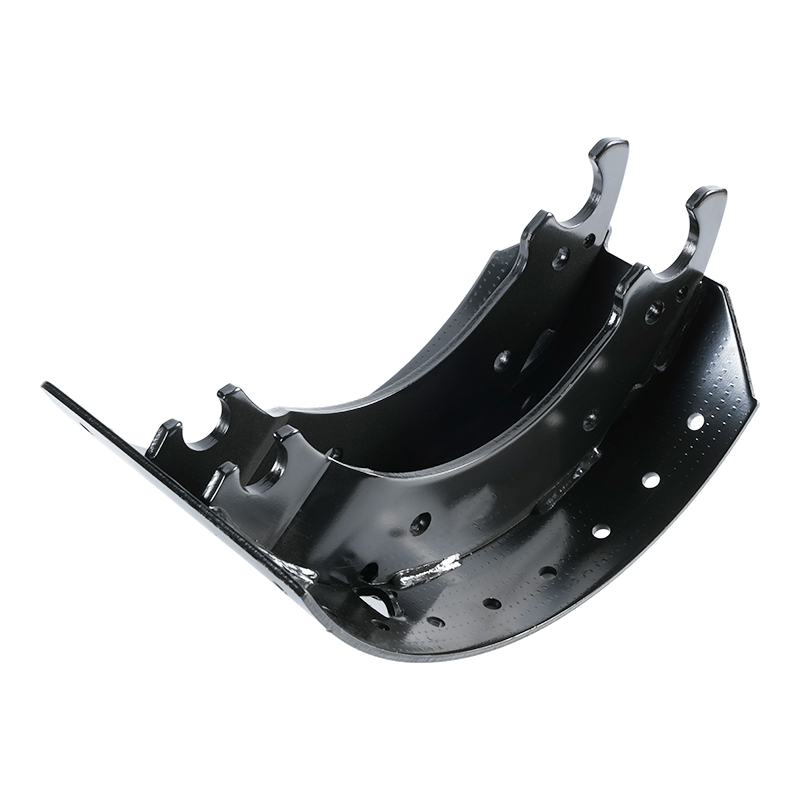
In a drum brake, the brake shoe is the moving half of the friction pair. It is a curved steel platform, usually a stamped web and table welded together, that carries the friction lining. When the driver applies the brakes, air pressure rotates the S-cam, the cam lobes spread the shoes outward, and the lining presses against the inside of the rotating drum. The drum is bolted to the hub, the shoes are anchored to the spider, friction turns motion into heat, and the vehicle slows.
Trailers stress that system differently from tractors. There is no engine braking to fall back on, and trailer shoes sit idle for long stretches between trips. On equipment that stands outside, corrosion can lift the lining away from the shoe table, a condition known as rust jacketing. That is why a trailer brake shoe rarely fails from friction wear alone. It usually goes out of service through a combination of wear, contamination, and time.
American and European Trailer Brake Shoe Platforms
The most common sourcing mistake is treating brake shoes as universal parts. They are not. North American and European trailer axles use different shoe geometry, different hardware, and different naming conventions, and our own catalogue is split along exactly that line.
| Consideration | American-Pattern Shoe | European-Pattern Shoe |
|---|---|---|
| Model families we produce | 1308E, 140, 1443E, 156, 21122, 4515Q, 4516, 4551, 4707, 4709, 4725 | BPW 300-200, BPW 360-200, BPW 180, BPW 220, RW9-13, SAF300, SK9, Volvo 175, Volvo 200 |
| Typical trailer service | North American heavy trucks, trailers and semi-trailers | European semi-trailers and trucks on the named axle platforms |
| Supply forms | Bare shoe, shoe with lining, full assembly, repair kit | Bare shoe, assembly, repair kit |
| First fitment check | Axle and spider reference, shoe width, roller size | Axle platform code, cam and adjuster type, shoe width |
| Repair kit coverage | 1308E, 4515, 4702, 4707, 4725 | BPW European and SAFI180 |
The table above is a starting point, not a substitute for looking at the axle. Two trailers built in the same year by the same manufacturer can carry different axles, and the shoe follows the axle, not the trailer badge.
Matching a Trailer Brake Shoe to the Axle
Fitment comes down to a short list of checks, and working through them in order saves return freight and downtime.
- Identify the axle. Read the plate on the axle beam or hub, and record the platform rather than the trailer brand.
- Confirm shoe width and lining thickness. A shoe built for a wider drum will not seat correctly, and an over-thick lining may not clear the drum at the start of its service life.
- Inspect the S-cam, rollers and anchor pin configuration. Worn rollers and stretched anchor pin holes produce exactly the same symptoms as a worn shoe.
- Decide between a bare shoe and an assembly. If the table and web are sound, relining works well. If the web is cracked or the roller slots are worn, replace the whole shoe.
- Verify the friction grade. Trailer duty cycles vary enormously, and the lining should be matched to the work the trailer actually does.
For North American trailer axles, one of the patterns we build most often is a trailer-specific shoe rather than a truck shoe adapted to trailer service.
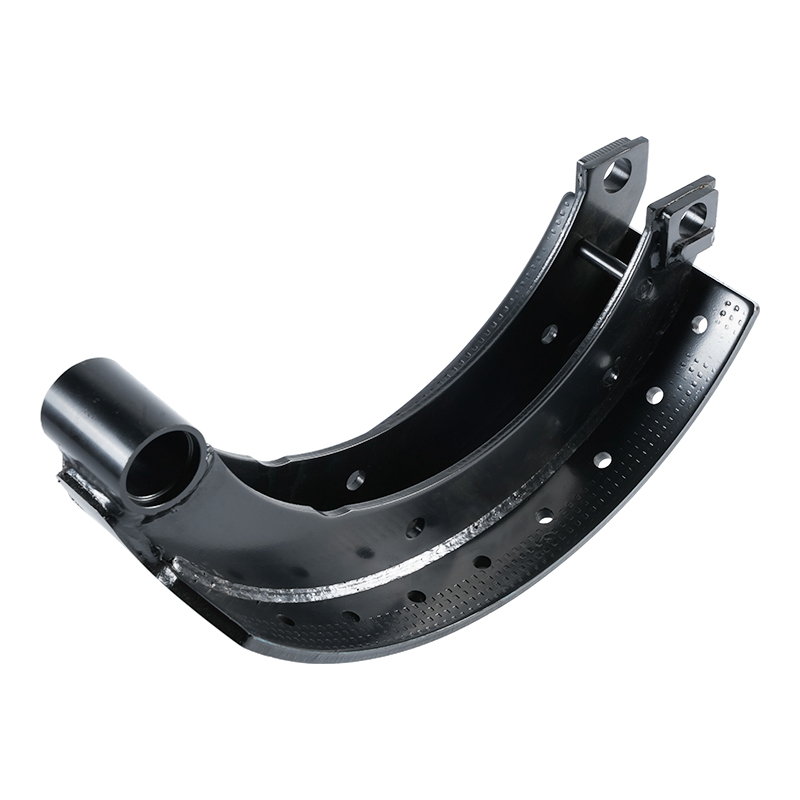
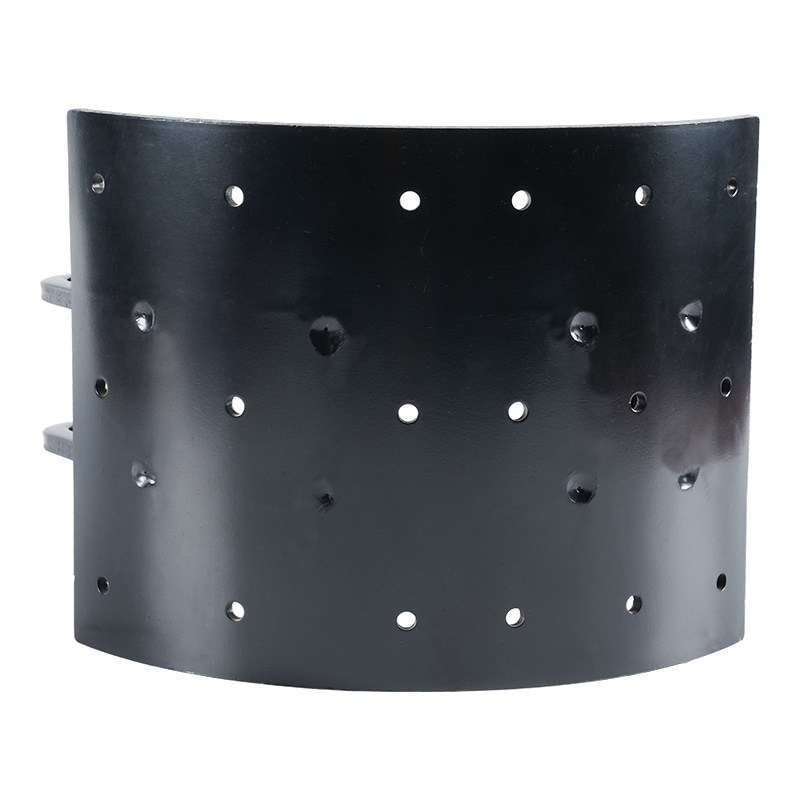 156 Brake Shoe for American TrailerThis model is commonly used in the american market. The products we provide customers have high-strength welding, stable dimensions, sufficient support for the brake p...View Product →
European Axle Platforms: BPW, SAF and Volvo
European trailer running gear is organised around axle platforms, and the shoe is named after the platform rather than the trailer. A BPW 300-200 shoe and a BPW 220 shoe are both BPW parts, but they belong to different axle generations and cannot be swapped. The same logic applies to SAF and Volvo references in our range.
When ordering for European equipment, always quote the platform code and, if possible, the drum diameter and shoe width. A semi-trailer that runs on European axles will often be serviced by workshops with no access to the trailer's build sheet, so the axle stamp is the fastest route to the correct part.
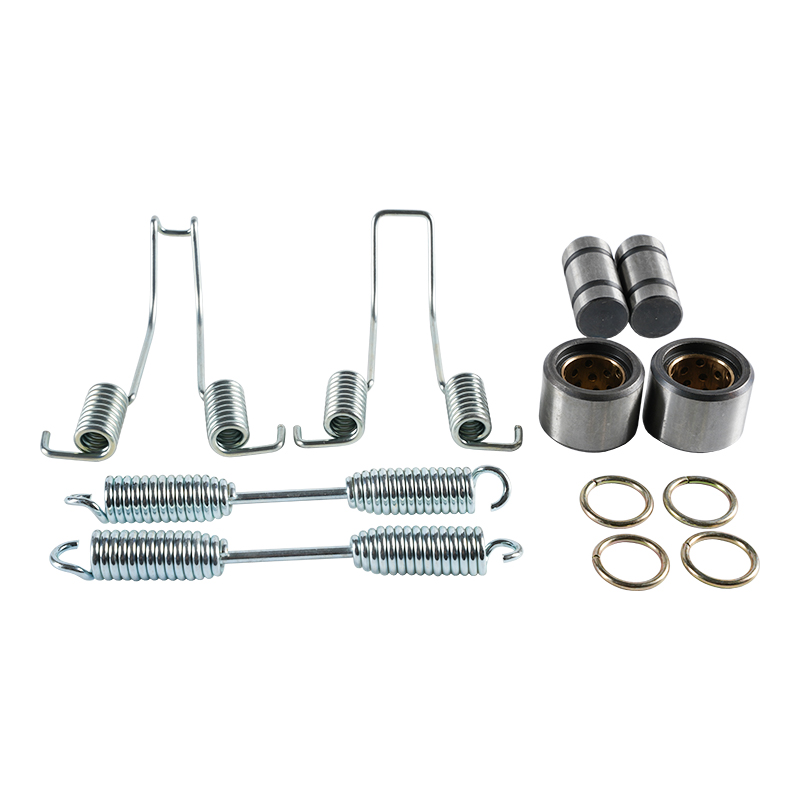
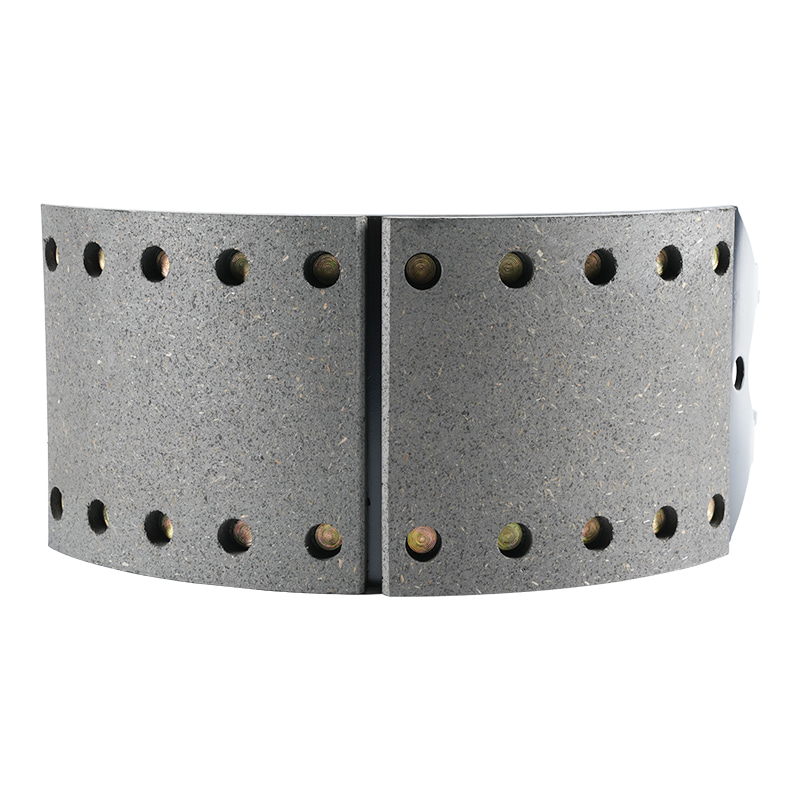 BPW European Brake Shoe for Semi Trailer and TruckThis model is commonly used in the european market. The products we provide customers have high-strength welding, stable dimensions, sufficient support for the brake p...View Product →
Warning Signs That a Trailer Brake Shoe Is Finished
Trailer brake shoes rarely announce themselves. Drivers feel the tractor, not the trailer, so problems are usually found during inspection rather than on the road. Watch for these signals:
- Lining thickness below the minimum stamped or specified for the axle, measured at the thinnest point.
- Uneven wear across one shoe or between shoes on the same axle, which points to a sticking S-cam, worn bushings or a seized roller.
- Rust jacketing, where corrosion has lifted the lining edge away from the shoe table.
- Grease, oil or wheel seal contamination on the friction surface.
- Cracks in the shoe web, elongated anchor pin holes, or a shoe that no longer sits square on the spider.
- Thumping, dragging or a trailer that pushes the tractor in the first metres of braking.
- A drum that has turned blue or shows deep scoring, which tells you the shoes have been running hot.
Any one of these is enough reason to pull the drum and inspect properly. Replacing a shoe before it damages the drum is almost always the cheaper decision.
What the Lining Compound Brings to the Equation
Two shoes with identical dimensions can behave very differently depending on the lining they carry. Modern trailer linings are non-asbestos compounds, generally grouped into organic and semi-metallic families. Organic compounds are typically kinder to drums and quieter in service, while semi-metallic grades resist fade better when the brakes are worked hard on long descents.
Riveted or Bonded?
Riveted linings can be replaced on a serviceable shoe table, which suits workshops that reline in house. Bonded linings offer more friction material for the same thickness because there are no rivet heads inside the friction path, but they require the shoe to be replaced as a unit. Both approaches are used on trailers, and both work well when the drum condition is good.
One practical rule matters more than the compound choice: keep friction matched across an axle. Mixing a nearly new lining with a well-worn one on the same axle loads one shoe harder and shortens the life of both.
Replacing a Trailer Brake Shoe Safely
Trailer brake work is heavy, and stored spring energy is the real hazard. Work through the job in a fixed order:
- Park on level ground, chock the wheels, and release the trailer parking brake before starting.
- Cage the spring brake or follow the axle maker's procedure to release stored spring force.
- Measure and record the drum bore. A scored or out-of-round drum will shorten the life of any new lining.
- Remove the drum, then the return springs, roller retainers and rollers, keeping the hardware organised per side.
- Inspect the S-cam, bushings, anchor pins and spider before fitting anything new.
- Fit the new shoe, reconnect the hardware, and torque fasteners to the specified figures.
- Adjust the slack adjuster, road test under load, and re-check adjustment after the first run.
If you would like the same sequence with more hands-on detail, our workshop guide to replacing a worn trailer brake shoe walks through the job step by step.
Bare Shoes, Assemblies and Repair Kits
Trailer brake parts are sold in three practical forms, and choosing between them is mostly a question of what else is worn. A bare shoe suits workshops that reline and reuse hardware. A shoe-and-lining assembly suits anyone who wants to bolt on a complete unit and get the trailer back in service quickly. A repair kit sits in between, bundling the shoe with the springs, rollers and small retaining parts that are normally thrown away during a brake job.
Kits are popular with fleets because the little parts are exactly what gets forgotten on a rushed job, and a stretched return spring will destroy a new lining in a few thousand kilometres. For American trailer axles, a complete kit covering the shoe and its hardware is often the most economical way to close out a brake job.
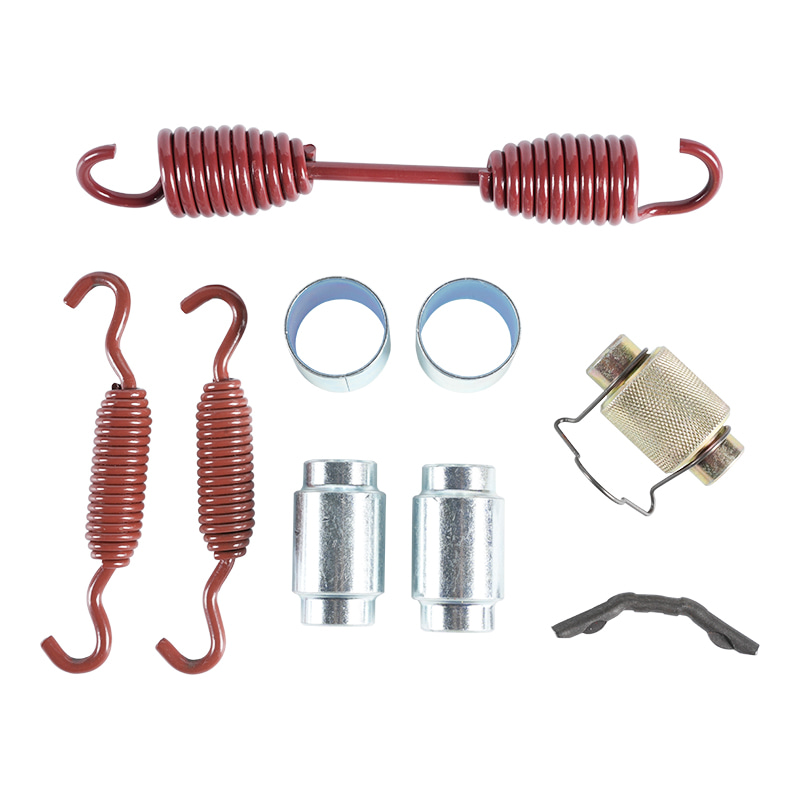
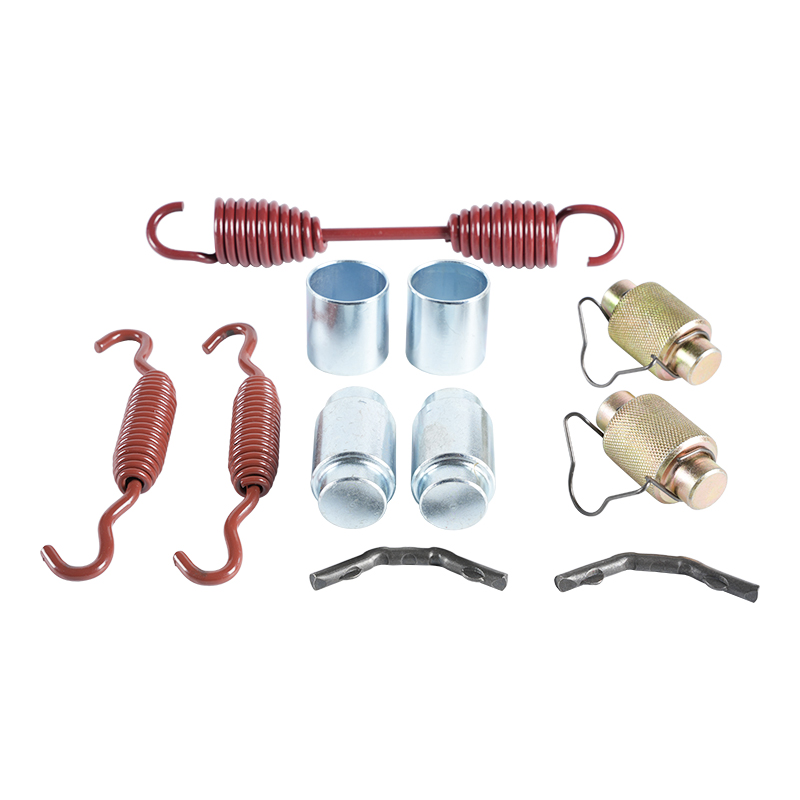 4515 American Brake Shoe Repair KitsThis model is commonly used in the south american market. The repair kit accessories produced by our company have stable technical parameters and accurate dimensions, ...View Product →
Sourcing Trailer Brake Shoes for a Fleet Programme
For a fleet, the goal is not simply the lowest unit price. It is consistent stopping behaviour, predictable lining life, and a supplier who can repeat the same part next quarter. That means asking for dimensional consistency, confirmed lining grade, and documentation that the shoe has been tested against the standards the destination market expects.
Zhejiang Langrun Auto Parts manufactures stamped and welded brake shoes, asbestos-free linings and complete assemblies for heavy trucks, semi-trailers and engineering vehicles. Our catalogue covers both American and European patterns, with bare shoes, assemblies and repair kits built around the same axle platforms, and our customers are concentrated among heavy vehicle builders and axle manufacturers in Europe and the Americas. If you are building a brake programme across a mixed fleet, that combination of two standards under one roof is usually what makes the sourcing conversation simple.
A trailer brake shoe is a small part carrying a large responsibility. It has to work on the first stop of the day, after weeks of standing in the rain, with a driver who cannot feel what it is doing. Choose the pattern that matches the axle, keep friction matched across the axle, and replace hardware before it damages the shoe.
If you are unsure which shoe suits your axles, send us the platform code, drum diameter and shoe width. That is enough for us to point you to the right part the first time.

 Home
Home +86-158-6900-2386 / +86-0571-61075636
 zjlrqp@163.com
 No. 518, Nanhu Road, Tianzihu Town, Anji County, Zhejiang Province, China
Copyright © Zhejiang Langrun Auto Parts Co., Ltd. All rights reserved. Heavy-Duty Brake Shoe Manufacturer in China

