


 Eng
Eng 
 中文简体
中文简体
 Home / News / Industry News / Truck Rear Front Brake Shoes: A Practical Guide for Heavy-Duty Truck Fleets
 Truck Rear Front Brake Shoes: A Practical Guide for Heavy-Duty Truck Fleets
 2026.10.13
 Industry News
Walk around a loaded tractor-trailer and you will not see much of the braking system. The shoes live inside the drums, hidden behind wheels that rarely come off, yet every stop depends on them. The set working at the front axle also lives a very different life from the set at the rear.
That is why the phrase truck rear front brake shoes almost always leads to the same first question at the parts counter: front or rear? The two positions share a shape and a working principle, but they see different loads, different heat cycles and different wear patterns. Getting that distinction right separates a brake job that lasts a full service interval from one that comes back with complaints. This guide covers what actually differs, how to read wear on each axle, and how to specify the right shoe the first time.
Content
- 1 Front and Rear Brake Shoes on a Truck: What Actually Differs
- 2 Front Brake Shoes: A Lighter Load, Sharper Demands
- 3 Rear Brake Shoes: Where Most of the Stopping Energy Goes
- 4 How to Tell When Front or Rear Shoes Need Attention
- 5 Why the Same Job Uses Different Part Numbers Around the World
- 6 A Short Checklist Before You Order
- 7 Fitting and Maintenance Notes That Prevent Comebacks
- 8 Working With a Brake Shoe Manufacturer
Front and Rear Brake Shoes on a Truck: What Actually Differs
Every drum brake on a heavy truck follows the same sequence. An air chamber pushes a slack adjuster, the adjuster rotates an S-cam or a wedge, and the cam spreads the shoes outward until the lining meets the drum. Nothing in that chain changes between axles. What changes is how often the cycle repeats and how much energy each axle absorbs.
On a typical 6x4 tractor, the steer axle carries a relatively light share of the gross combination weight, while the drive axles and trailer axles carry the rest. Weight transfer under braking pushes the front axle harder than its static load suggests, so front shoes do real work. Even so, the rear shoes usually run hotter for longer, especially on long descents and in stop-start distribution duty.
That difference shows up in the way linings age. Front shoes often wear unevenly, because alignment, kingpin condition and cam bushing wear all change how the lining contacts the drum. Rear shoes tend to wear faster and more evenly, driven mainly by thermal load.
| What changes | Front (steering axle) | Rear (drive and trailer axles) |
|---|---|---|
| Static load carried | Lighter share of gross weight | Heavier and more constant share |
| Braking duty | Short, sharp input, sensitive to weight transfer | Sustained and repeated, high thermal load |
| Wear pattern | Often uneven, linked to geometry and alignment | Usually faster and more even |
| Early warning signs | Pull to one side, steering wheel vibration | Longer stopping distance, hot drum smell, heat cracks |
| Hardware that wears alongside | Cam bushings, rollers, anchor pins, return springs | Same set, plus slack adjusters and chambers on high-mileage units |
The practical conclusion is straightforward: a shoe that performs well on a drive axle is not automatically the right choice for a steering axle, and a fleet running mixed routes should track wear on each position separately.
Front Brake Shoes: A Lighter Load, Sharper Demands
Front shoes rarely reach the sustained temperatures seen at the rear, but they are asked to deliver force quickly, and any imbalance is felt directly through the steering wheel. That makes geometry-sensitive wear the main enemy. A worn cam roller, a tired return spring or a slightly bent anchor pin will show up as a pull to one side long before the lining is finished.
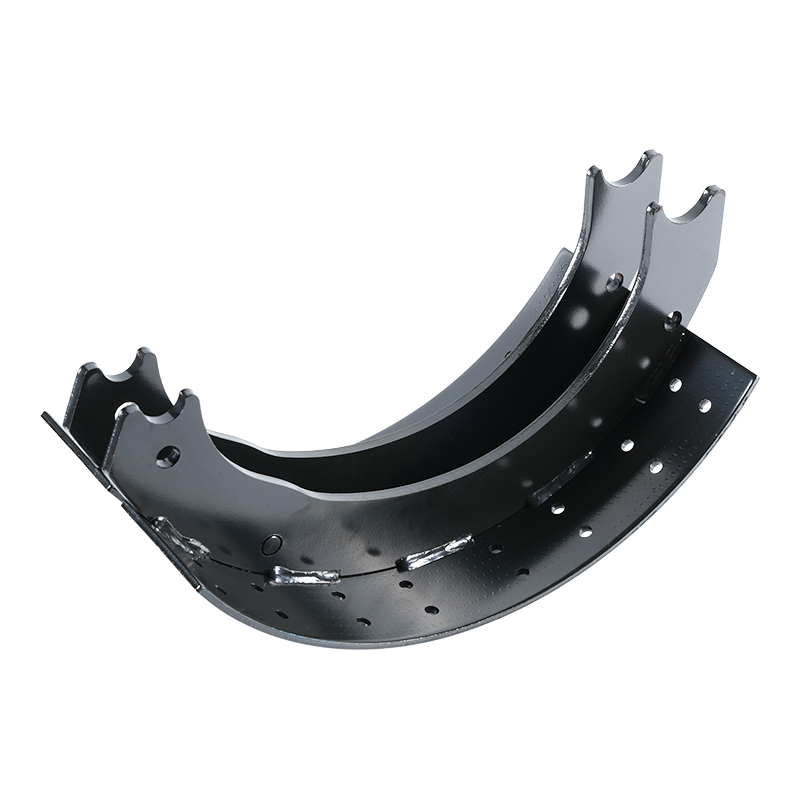
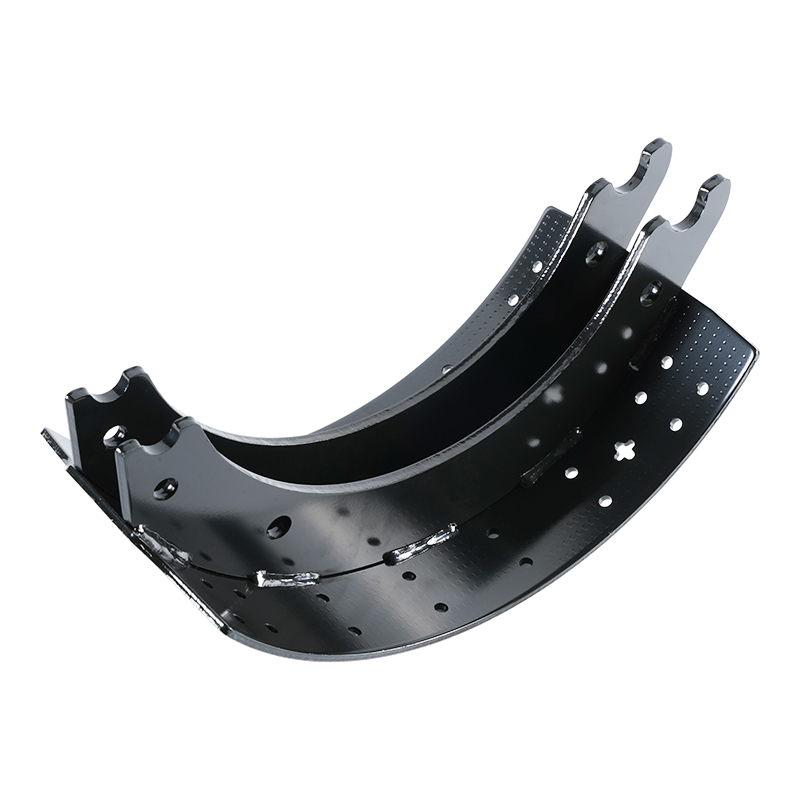
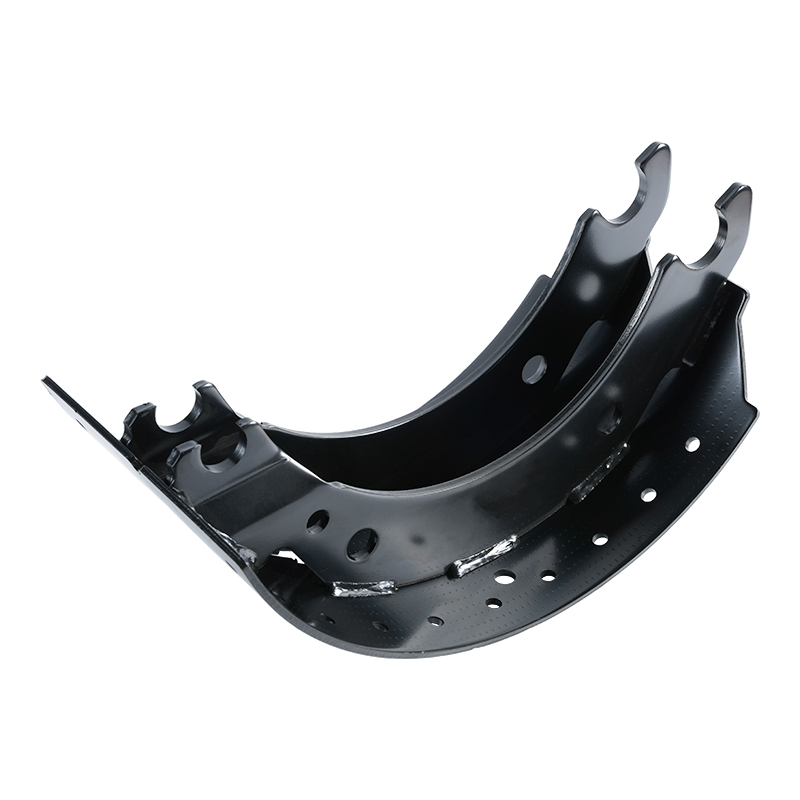
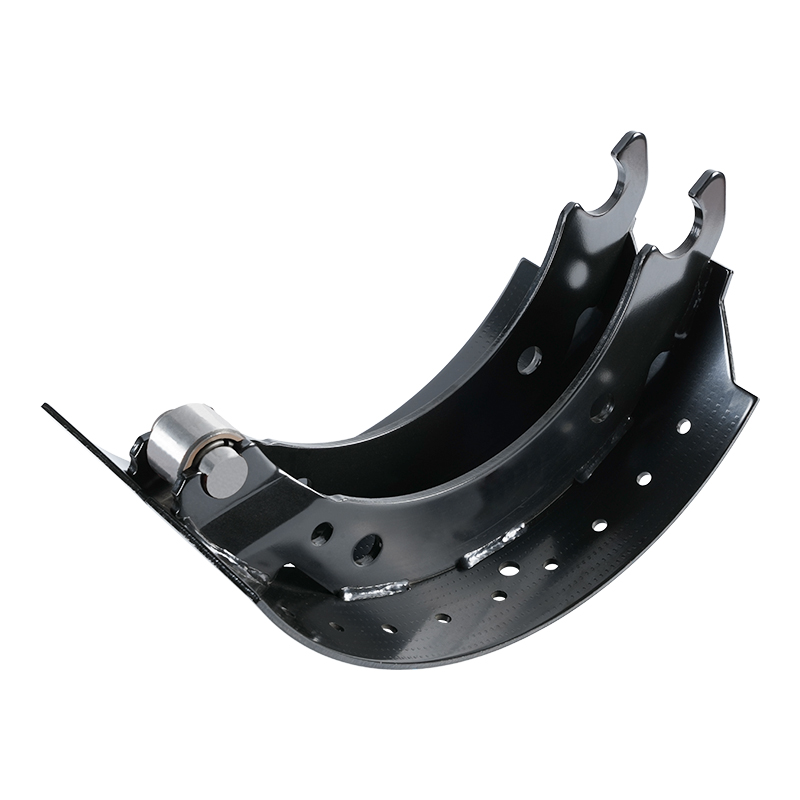
For North American trucks, many steering-axle applications sit in the smaller American shoe families, and plenty of fleets still specify shoes without lining so they can rivet or bond their preferred friction material. Matching the shoe to the drum diameter and the cam profile matters far more than any claim about lining hardness.
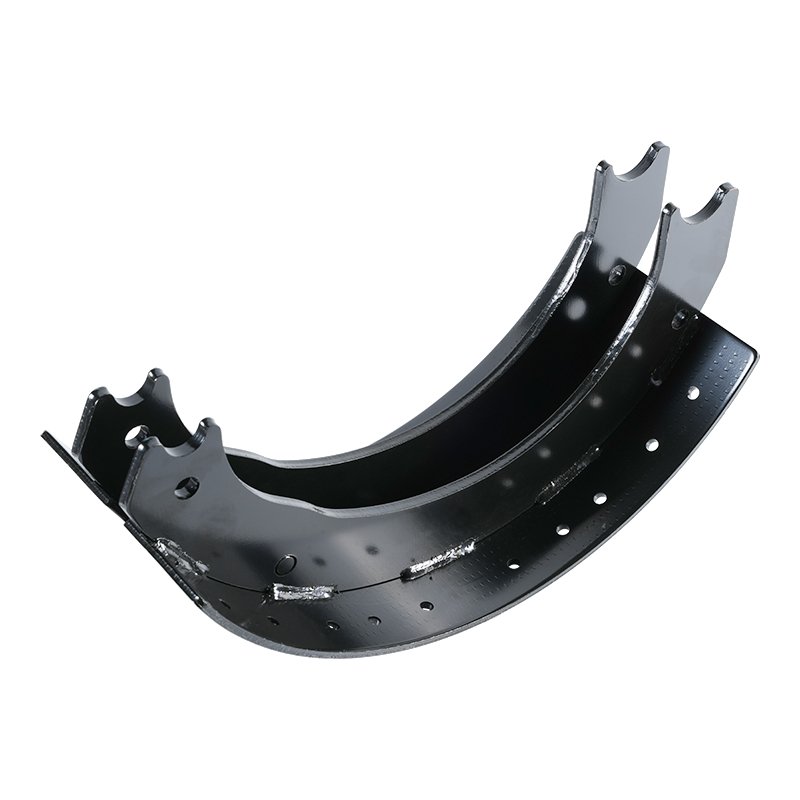
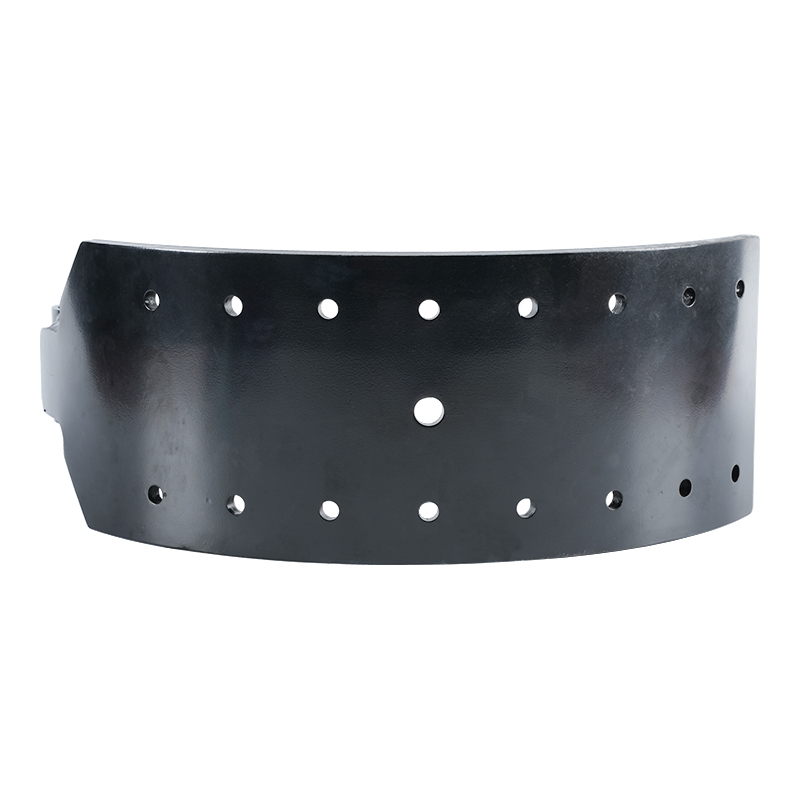 OEM 140 American Brake Shoe for Heavy VehiclesHeavy-duty American-market brake shoe with high-strength welding, stable dimensions, pad support, and durability for trucks needing dependable replacement components.View Product →
Rear Brake Shoes: Where Most of the Stopping Energy Goes
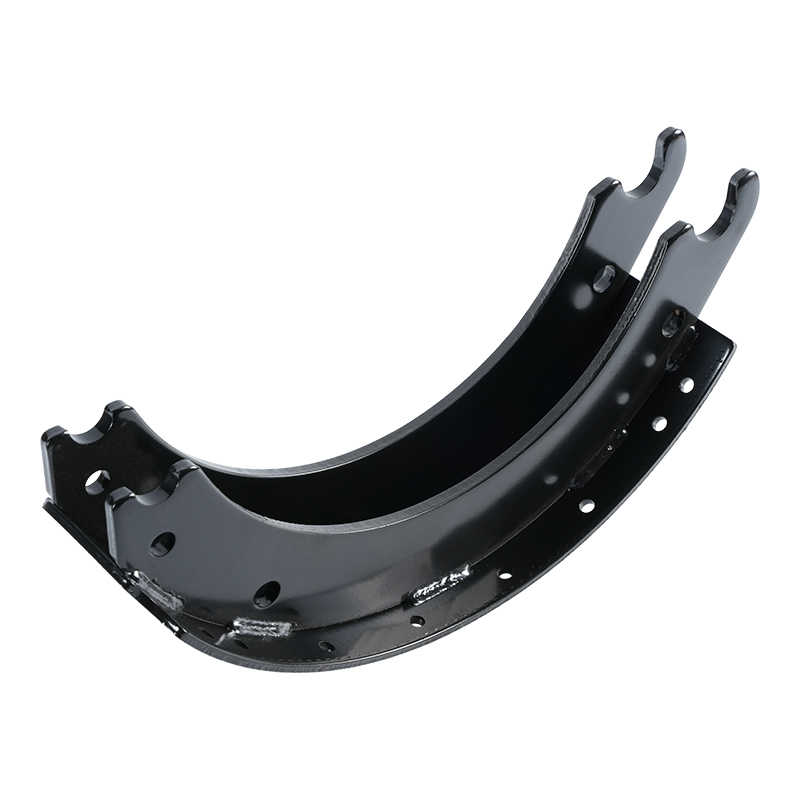
Drive and trailer axles do the heavy lifting. On a fully loaded combination they absorb the largest share of braking energy, and the shoes can sit at high temperature for minutes at a time on a mountain grade. That is why rear linings are usually thicker, why heat cracking is a routine inspection item, and why shoe and drum concentricity has such a large effect on service life.
North American fleets work with well-known drive-axle sizes such as 4515Q, 4707 and 4725, while European operations deal with platform-based references like BPW 300-200, SAF300 and Volvo 200 that map to specific axle builders. Trailer axles add another layer, since they often run a similar shoe to the drive axle but with different slack adjuster settings and a different duty cycle.
Whatever the platform, a rear shoe that runs true, returns cleanly and keeps its lining square to the drum will outlast one that is fighting a worn bushing or a stretched spring, no matter how good the friction material is.
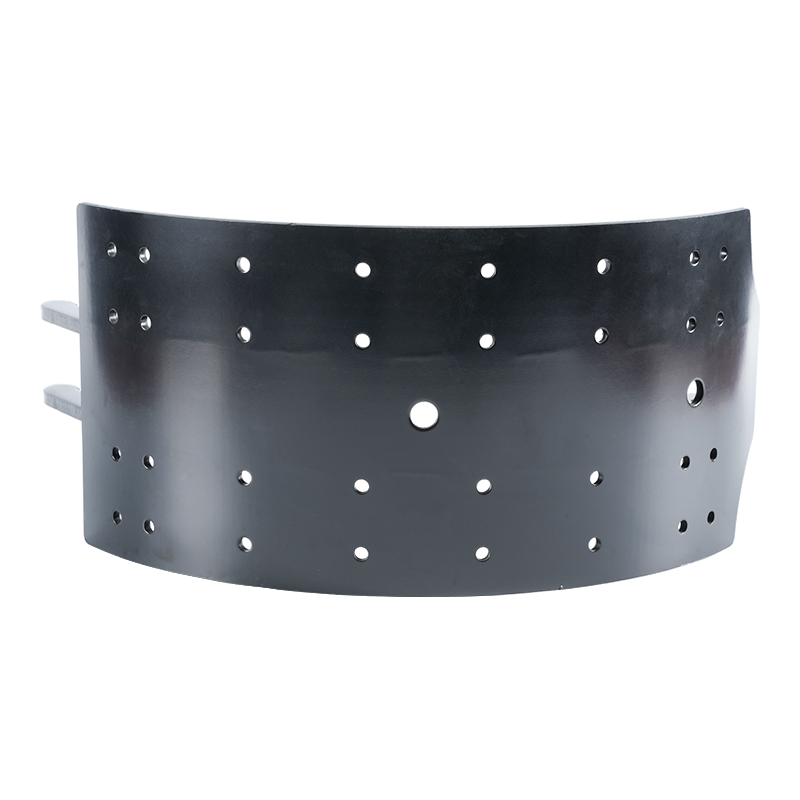 OEM 4515Q Heavy Truck American Brake ShoeSouth American-market heavy truck brake shoe with high-strength welding, stable dimensions, pad support, and durability for American-type braking applications.View Product →
How to Tell When Front or Rear Shoes Need Attention
A drum does not have to come off for a technician to build a useful picture. Read together, the following signs usually point to the axle that needs work first.
- Longer stopping distance, or a soft, low pedal that does not respond to adjustment.
- A pull to one side under braking, which most often points to the front axle.
- A hot drum smell, blue discoloration or visible heat cracking, typical of rear positions after heavy grades.
- Squealing, grinding or a rhythmic rub that changes with wheel speed.
- Lining thickness below the fleet replacement threshold, or lining that is cracked, glazed or contaminated.
- Seized cam rollers, worn anchor pins, and springs that no longer return the shoe fully.
Any of these deserves a proper inspection, and the sequence matters. A useful reference for the whole process is this guide to when front and rear brake shoes need replacing, which walks through measurement, drum condition and the decision points between relining and full replacement.
Why the Same Job Uses Different Part Numbers Around the World
Ask two fleets in two markets for a rear brake shoe and you may receive two completely different parts, even though both trucks are heavy combinations. American brake systems evolved around their own drum diameters, cam profiles and lining widths, while European systems standardised around axle platforms from BPW, SAF and the major truck builders. A shoe that fits a North American drive axle will not fit a European semi-trailer axle, and the mounting hardware differs just as much.
| Market family | Typical references | Common application |
|---|---|---|
| American | 1308E, 140, 1443E, 156, 4515Q, 4707, 4725 | North American heavy trucks and trailers |
| European | BPW 300-200, BPW 360-200, BPW180, SAF300, Volvo 175 and 200, RW9-13, SK9 | European trucks and semi-trailers |
| South American | 4516 | Truck and trailer applications |
| Assemblies | 4311, 4551 with lining, 4702, 4707, BPW 300-200 | OEM build and rebuild work |
| Repair kits | 1308E, 4515, 4702, 4707, 4725, BPW European, SAFI180 | Workshop service and fleet maintenance |
A Short Checklist Before You Order
- Confirm the axle position, because the same truck often uses different shoes front and rear.
- Read the marking on the old shoe or drum instead of relying on the truck model year.
- Record drum diameter, lining width and thickness, and whether the shoe is supplied with or without lining.
- Note the cam type and the hardware set that comes with the shoe.
- Decide between a bare shoe, a complete assembly and a repair kit based on what the workshop will actually replace.
- Check that the kit includes rollers, springs and retaining hardware if the old set has already been through several intervals.
Fitting and Maintenance Notes That Prevent Comebacks
- Clean and inspect the camshaft, bushings and anchor pins before new shoes go on, because worn hardware destroys a new lining quickly.
- Check drum diameter, roundness and surface condition against the manufacturer limit.
- Set the slack adjuster correctly, confirm pushrod stroke after installation, then re-check after the first loaded run.
- Bed in new linings with a series of moderate stops before returning the vehicle to full payload work.
- Log which axle, which part number and which mileage, since the pattern across the fleet is the best guide to future intervals.
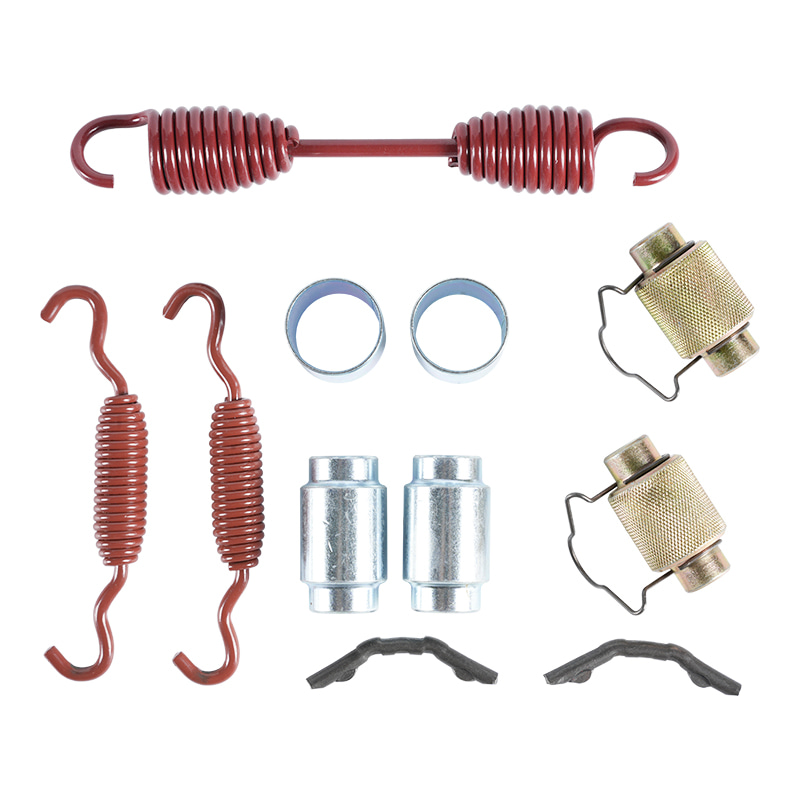
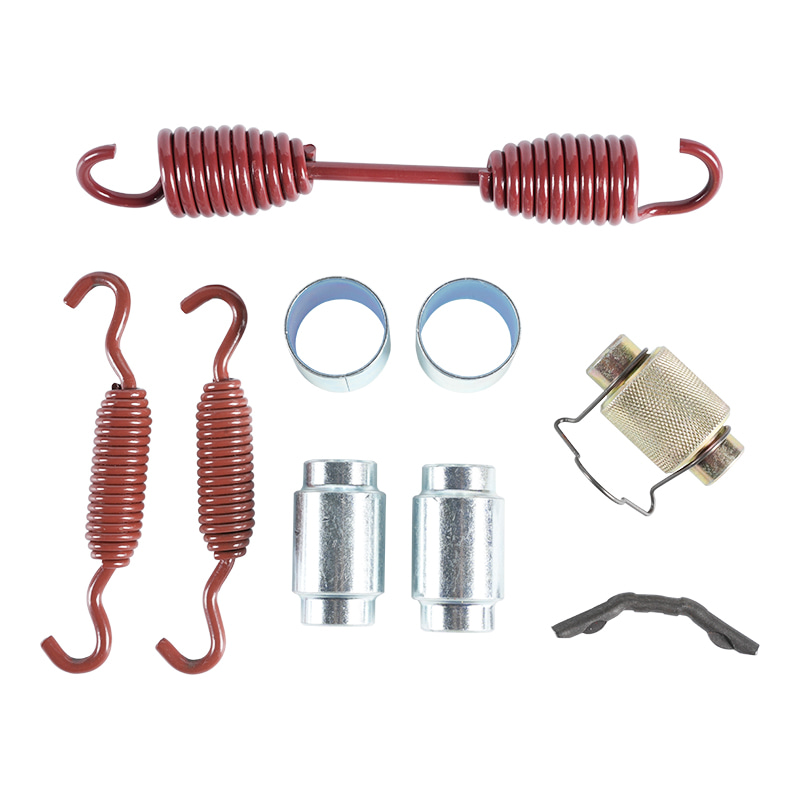
For workshops that prefer to renew the whole contact set in one go, a repair kit usually makes more sense than ordering components separately.
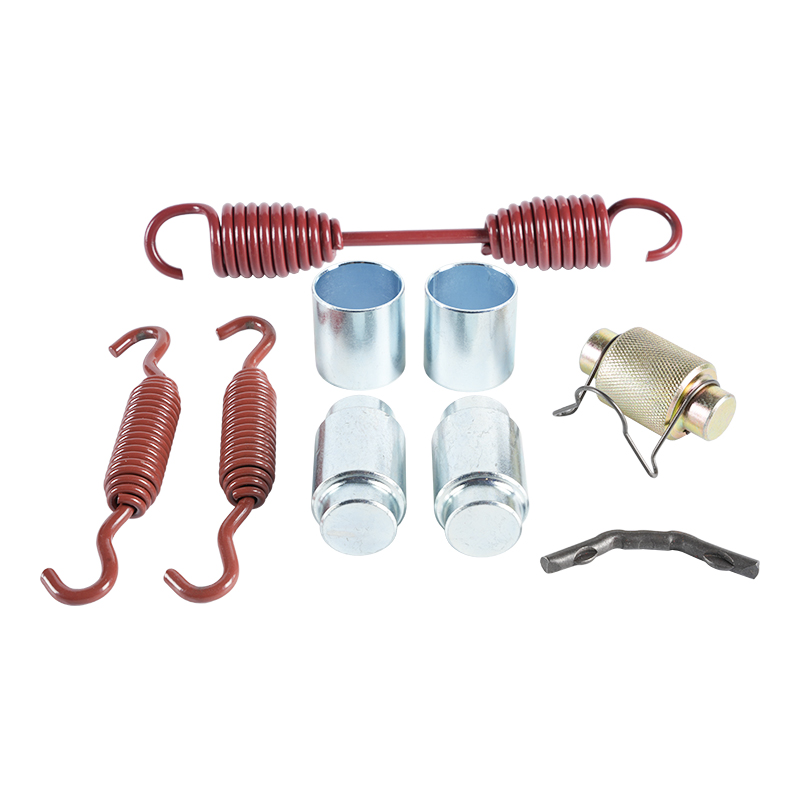 OEM 4707 American Brake Shoe Repair KitSouth American-market repair kit for heavy trucks and construction vehicles, including asbestos-free linings, adjustment screws, springs, and positioning plates for brake system renewal.View Product →
Working With a Brake Shoe Manufacturer
Zhejiang Langrun Auto Parts has focused on stamped and welded brake shoes for heavy trucks, semi-trailers and engineering vehicles since 2010, with a catalogue built around American and European axle platforms rather than a single universal part. The range covers bare shoes, assemblies with lining and repair kits, which lets a distributor or a fleet standardise on one supplier across several axle families instead of juggling sources for every platform.
Products are tested against American bench standards and domestic automotive standards, with the stated aim of meeting European and American import requirements, and the customer base sits mainly with heavy vehicle builders and axle manufacturers in Europe and the Americas. If you want to see how the range maps to your own platforms, you can browse the full brake shoe range.
Front and rear brake shoes look alike on a shelf and behave nothing alike on the road. The front axle rewards attention to geometry and hardware condition, while the rear axle punishes poor heat management and worn contact surfaces. Treat each position as its own specification problem, keep records per axle, and the brake job stops being a recurring headache, which is the only outcome that matters when a loaded combination has to come to a controlled stop.

 Home
Home +86-158-6900-2386 / +86-0571-61075636
 zjlrqp@163.com
 No. 518, Nanhu Road, Tianzihu Town, Anji County, Zhejiang Province, China
Copyright © Zhejiang Langrun Auto Parts Co., Ltd. All rights reserved. Heavy-Duty Brake Shoe Manufacturer in China

